
Payment & Security
Your payment information is processed securely. We do not store credit card details nor have access to your credit card information.
Description
Japanese stainless steel hand files
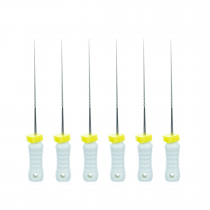
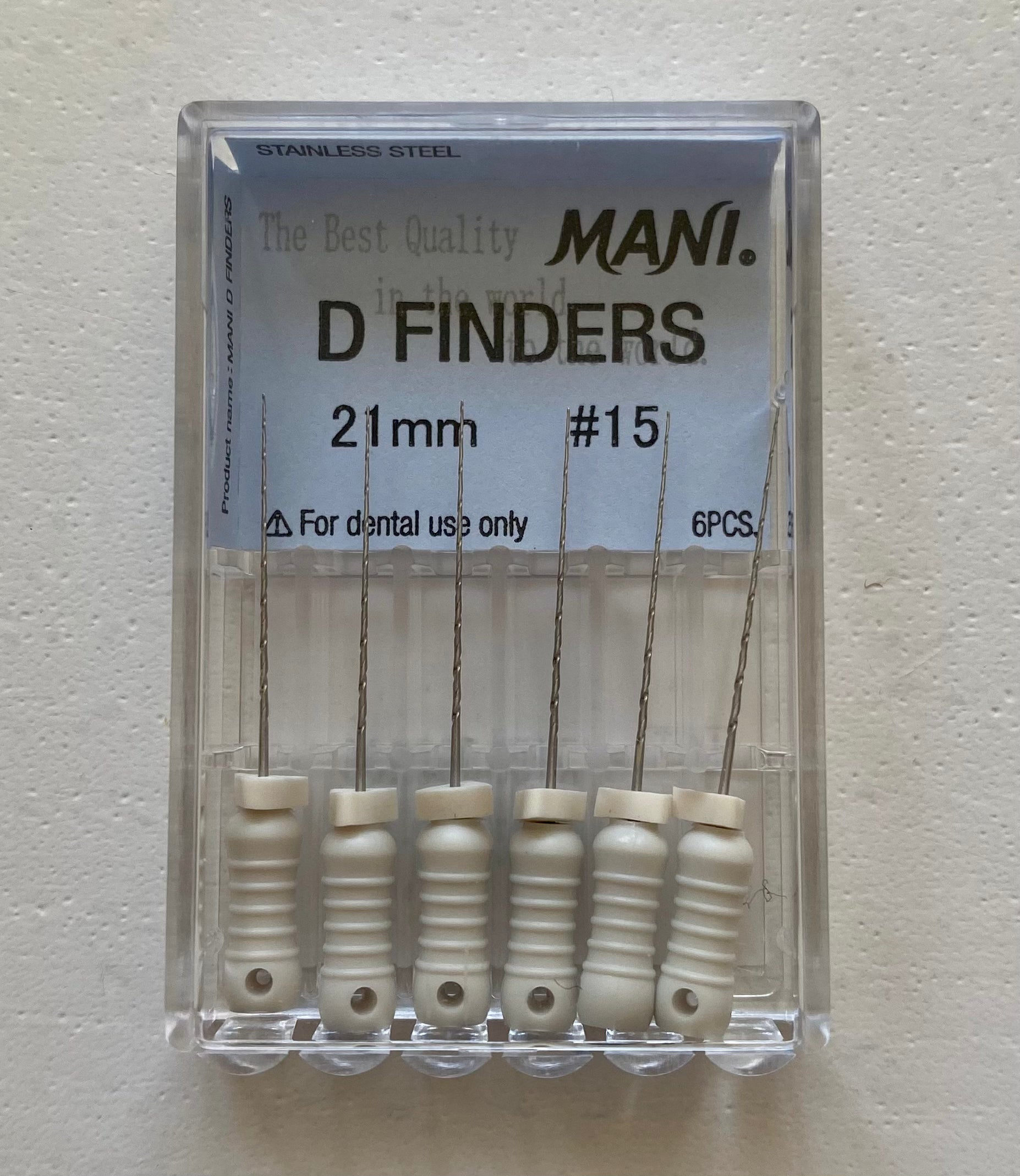
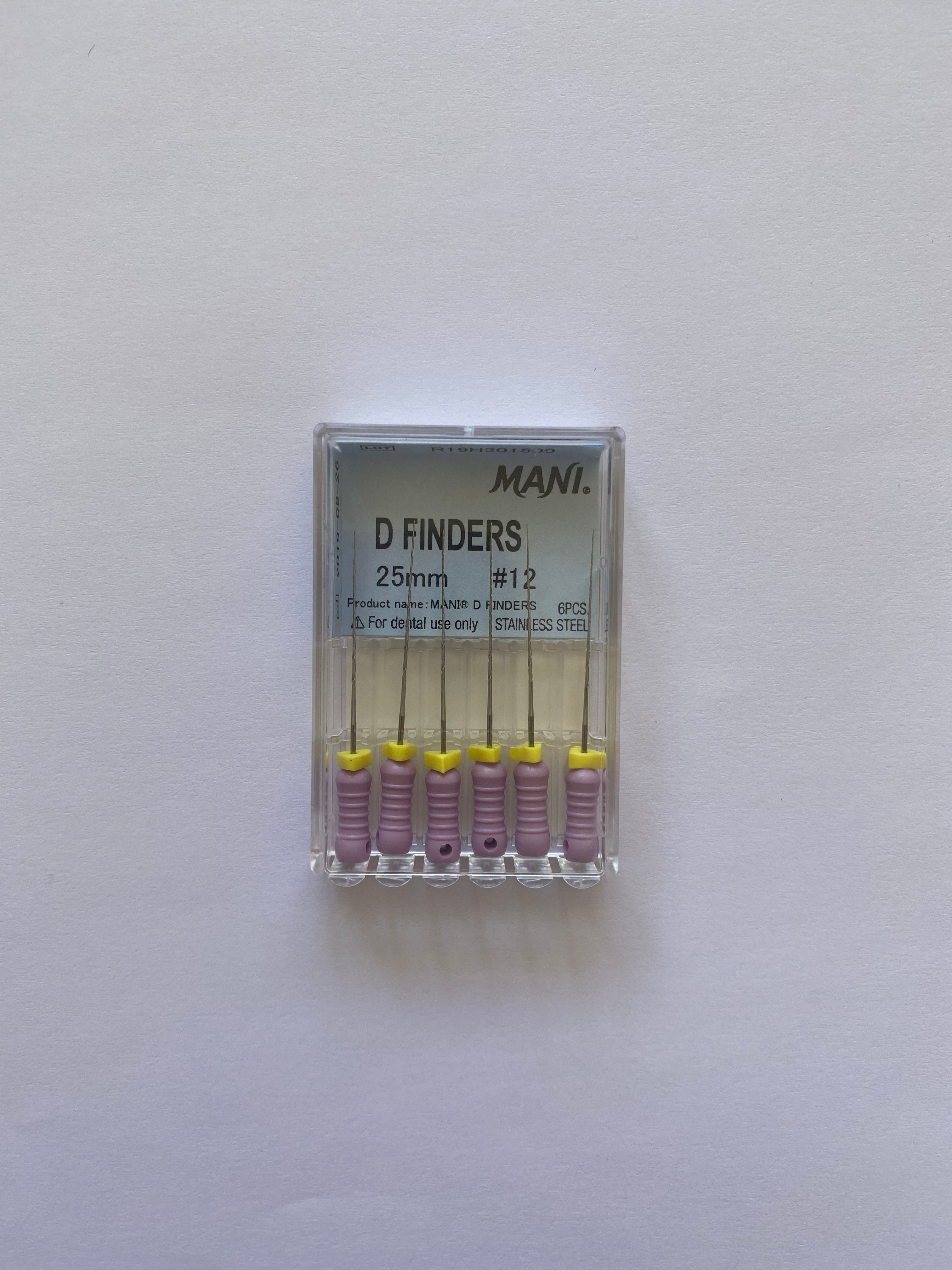
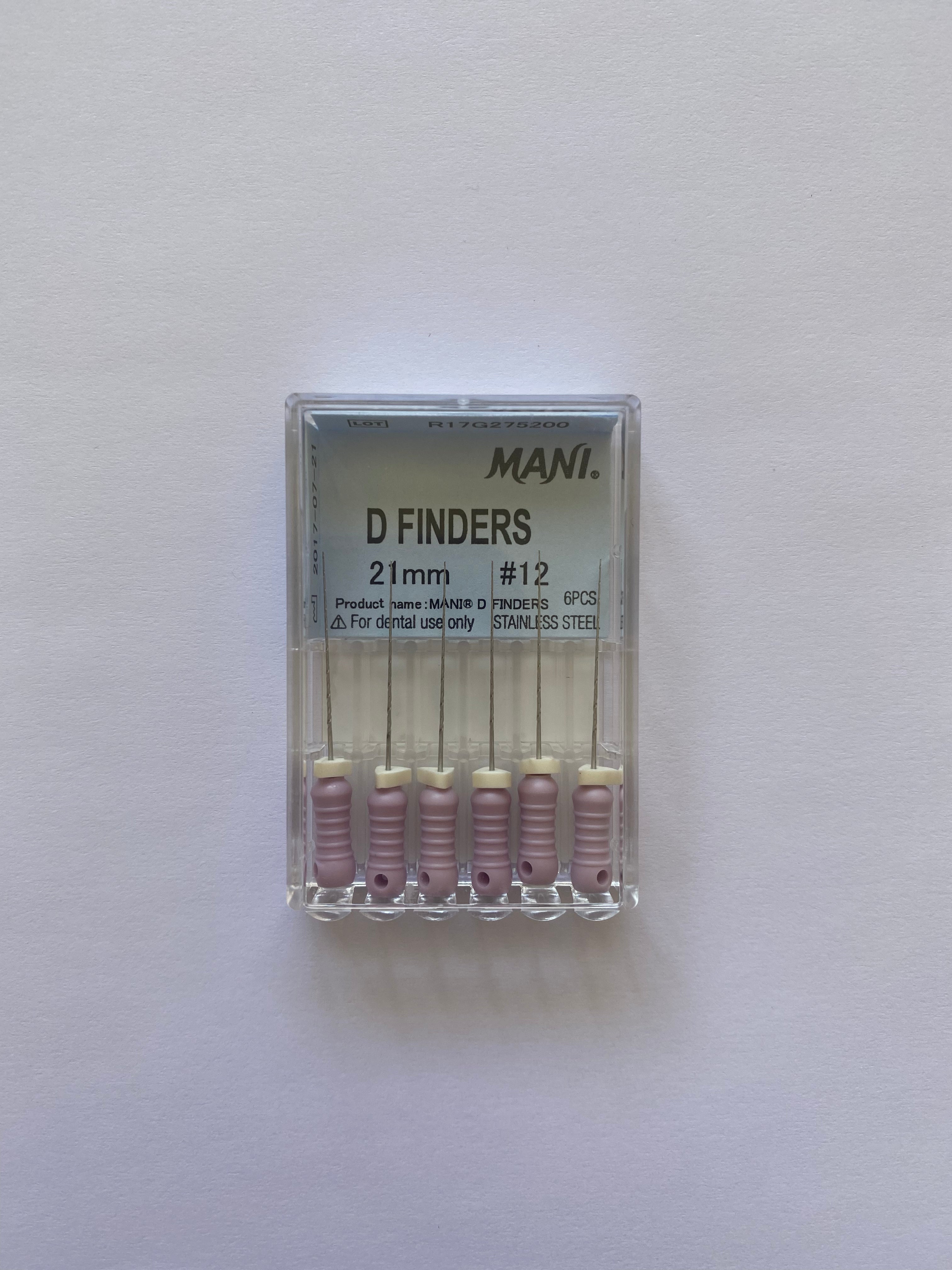
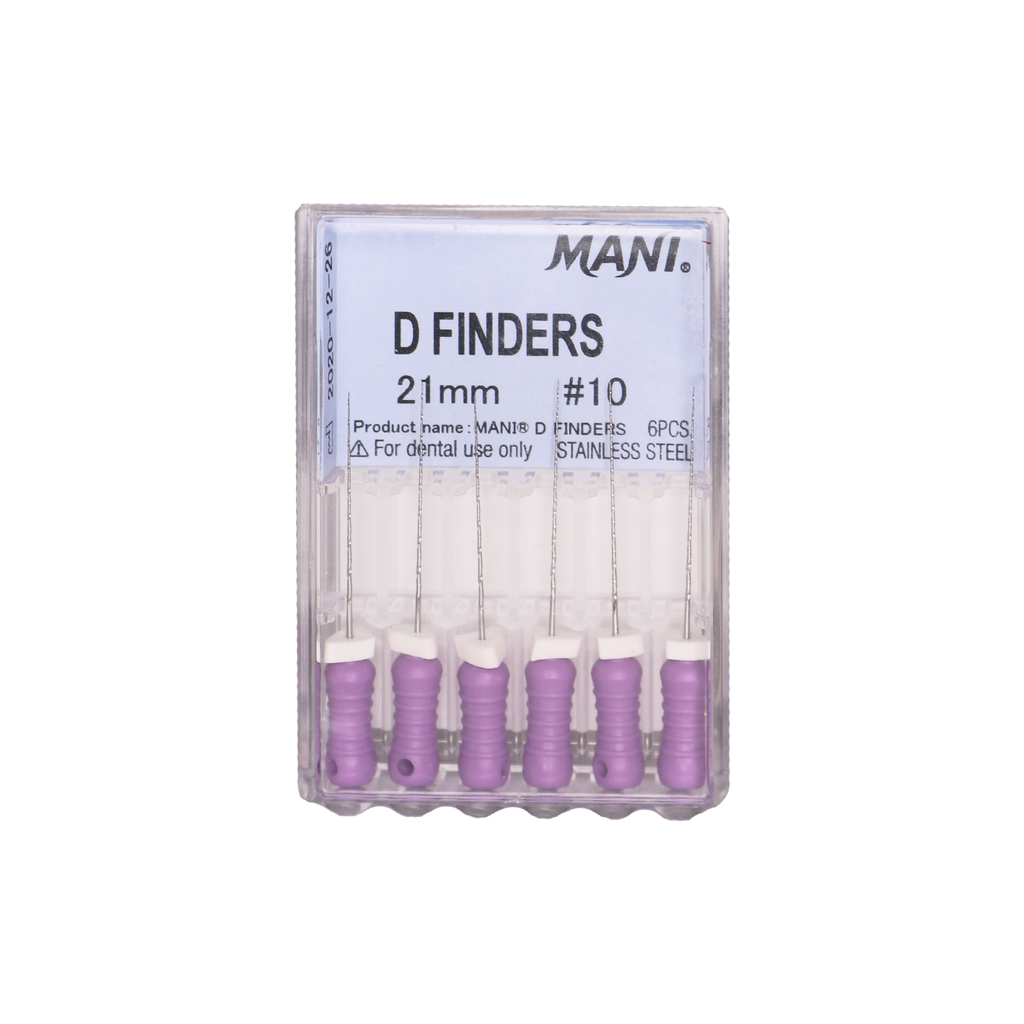
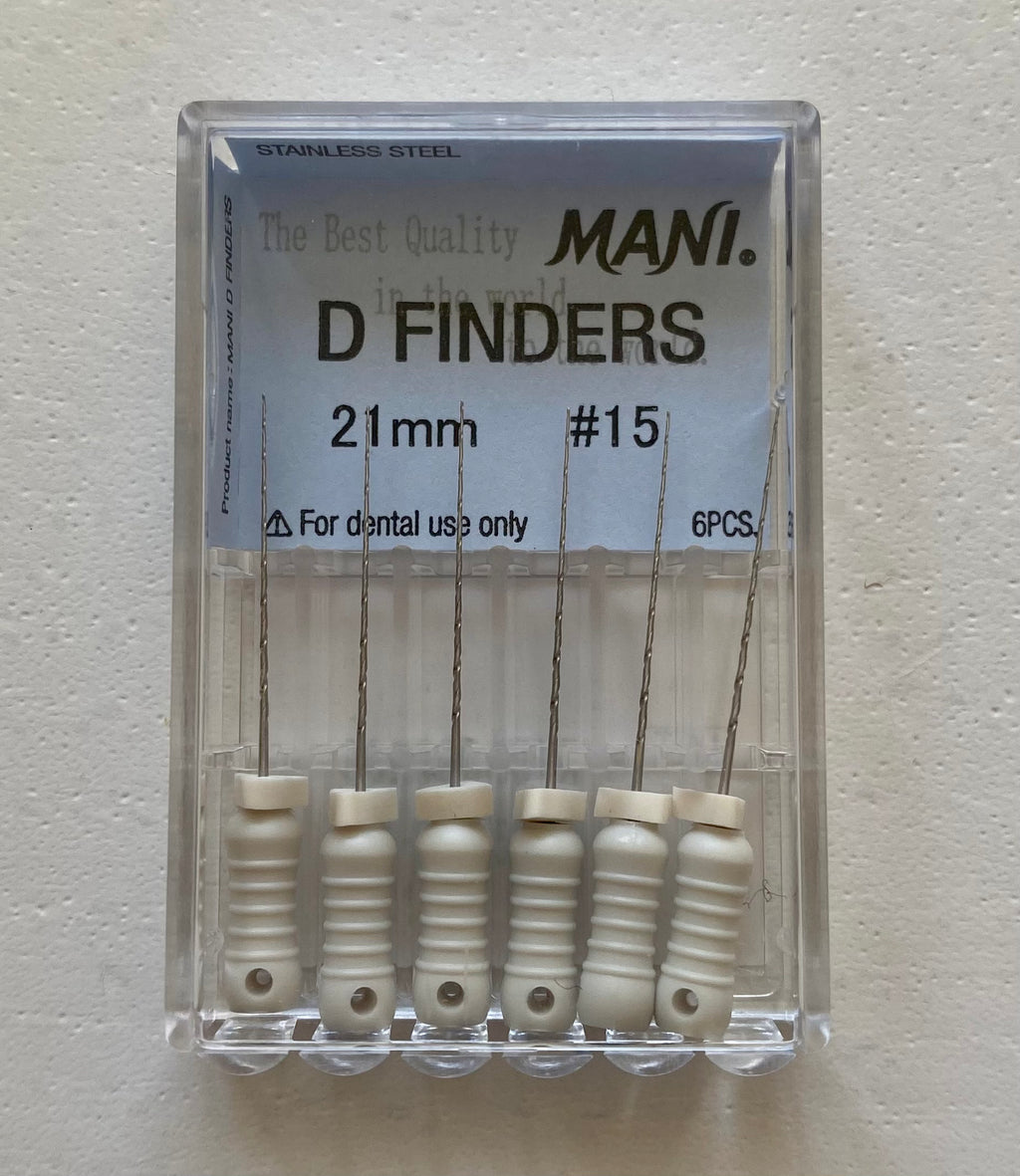
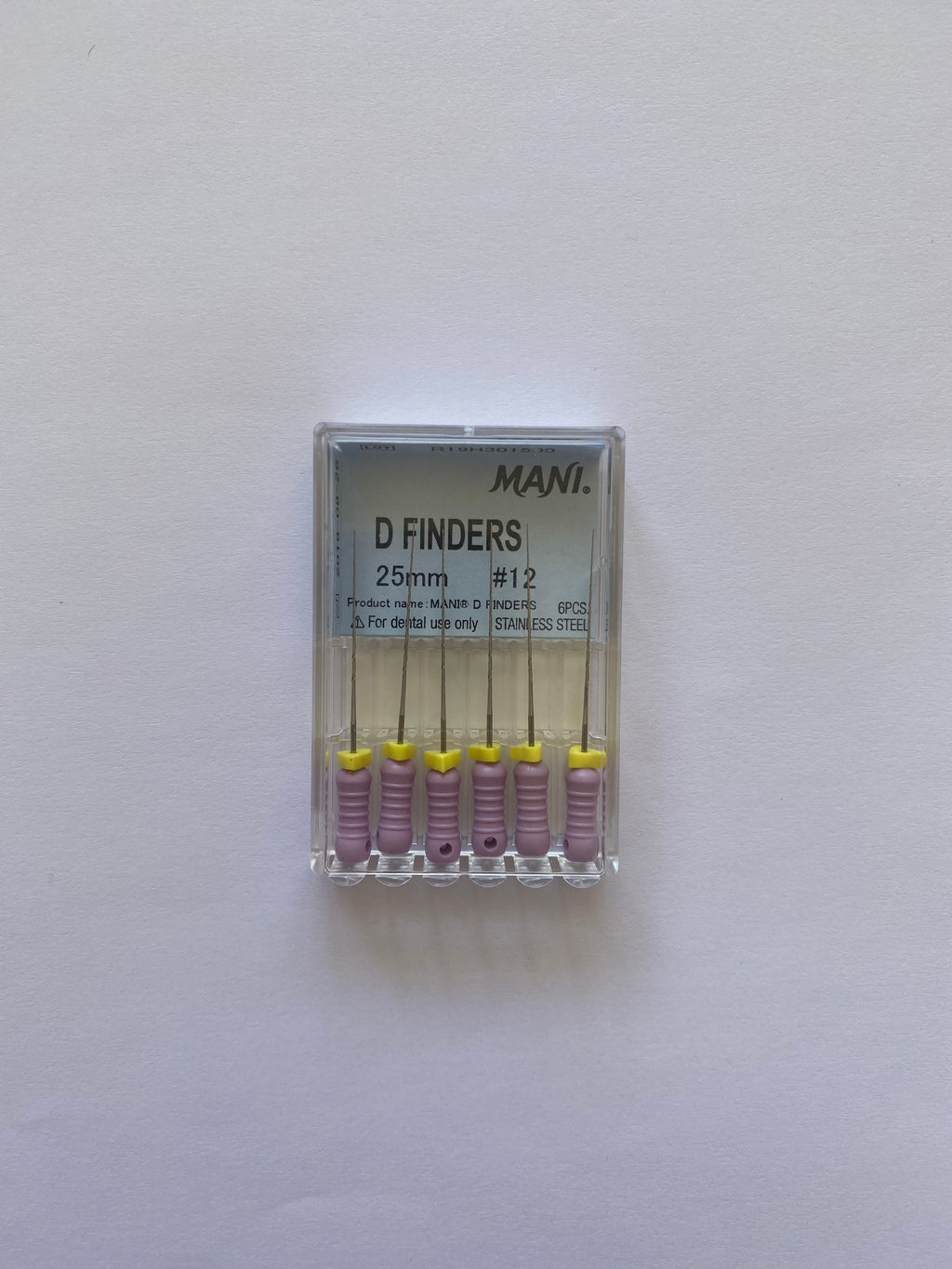
MANI D-Finder Hand Files for Calcified Canal Negotiation & Glide Path Control
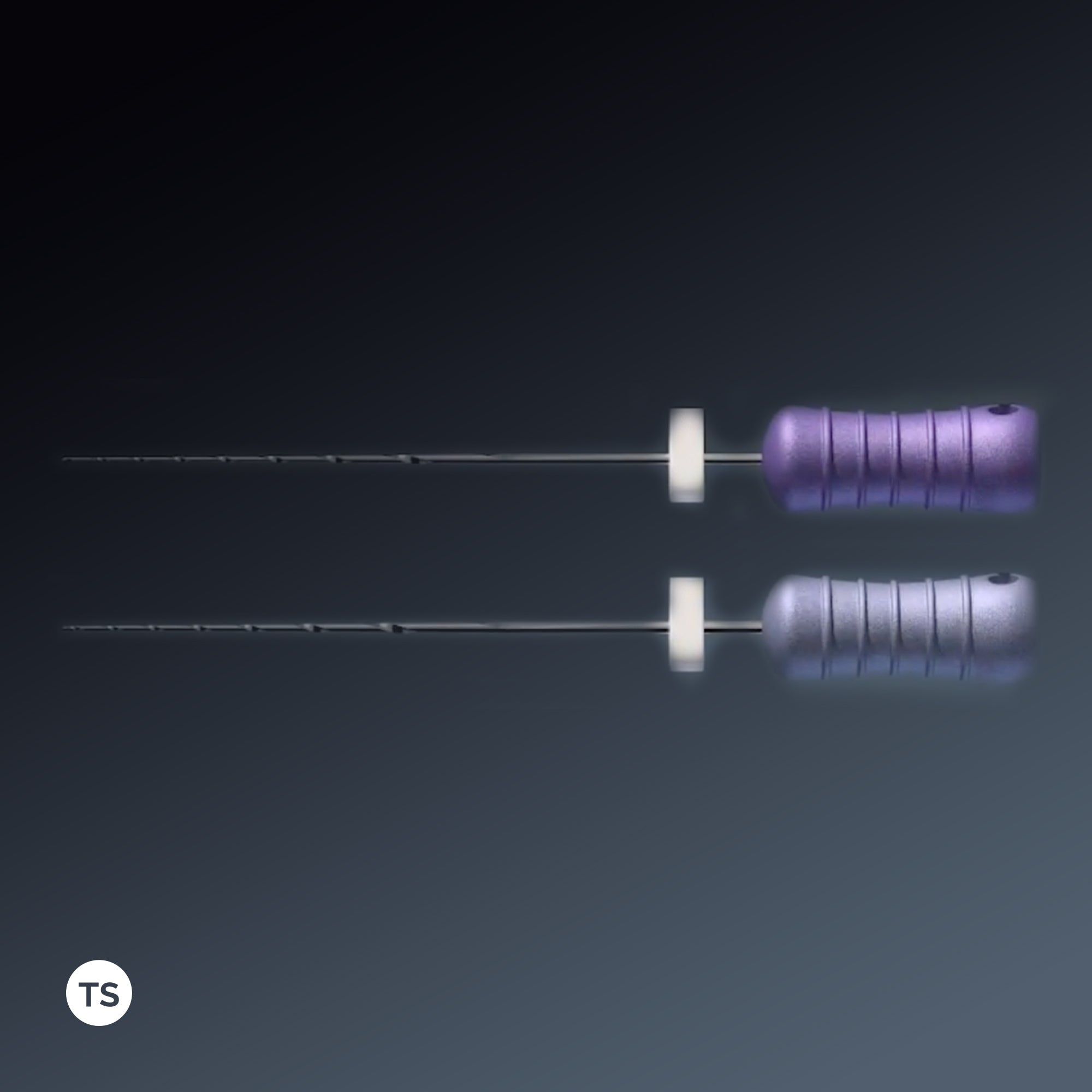
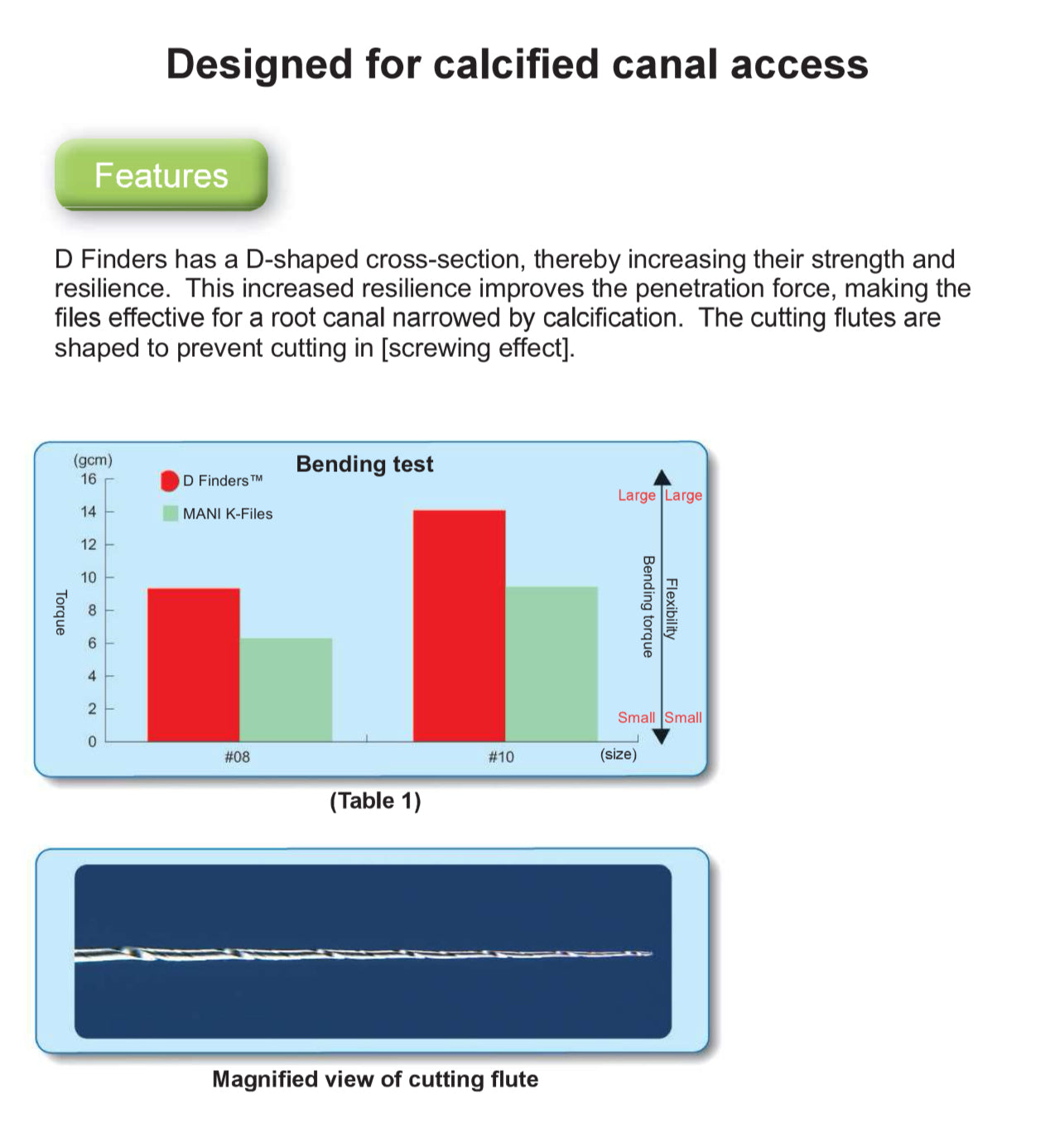
MANI D-Finder hand files are designed for narrow, calcified, curved and difficult-to-negotiate canals. Their D-shaped cross-section gives greater stiffness than a conventional K-file, helping clinicians penetrate restricted canals while maintaining the tactile control needed for safe canal negotiation.
Designed for the canals that resist negotiation
In calcified or restricted canals, a standard hand file can lack the stiffness needed to progress safely. MANI D-Finder files are engineered to give controlled penetration force while preserving the tactile feedback clinicians rely on.
- Useful for narrow, calcified and curved canals
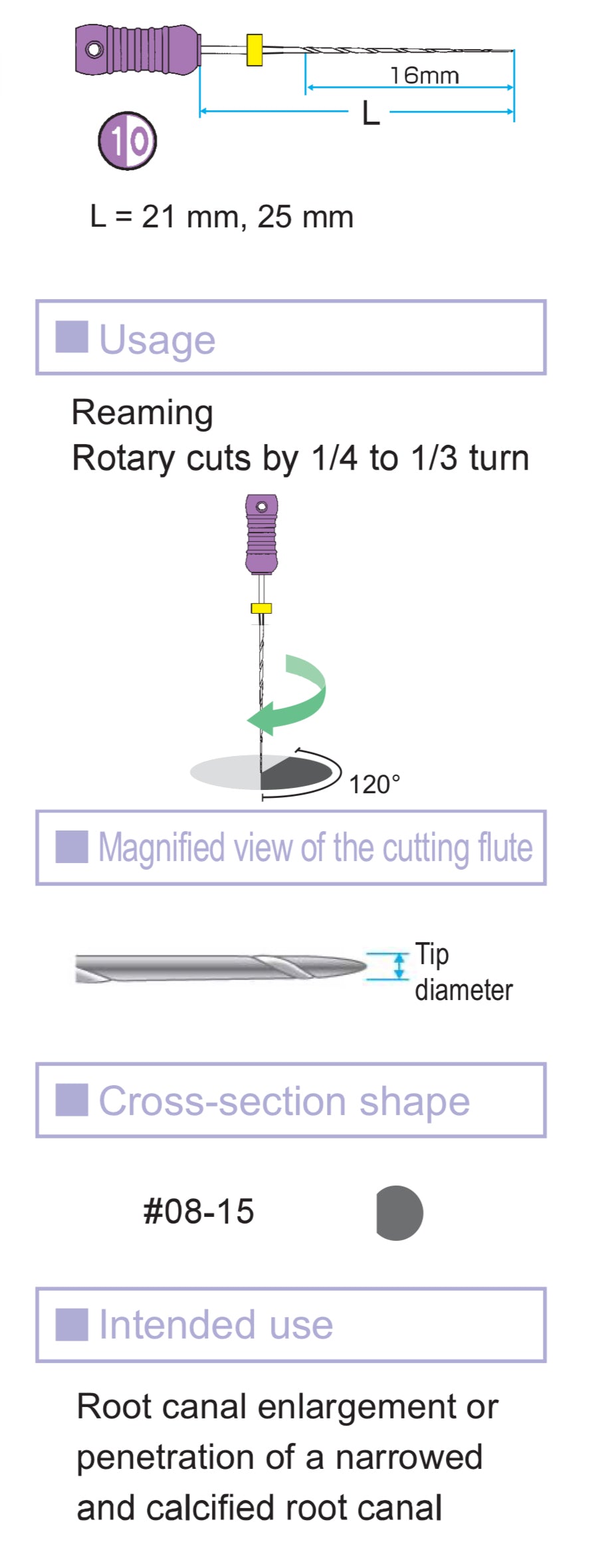
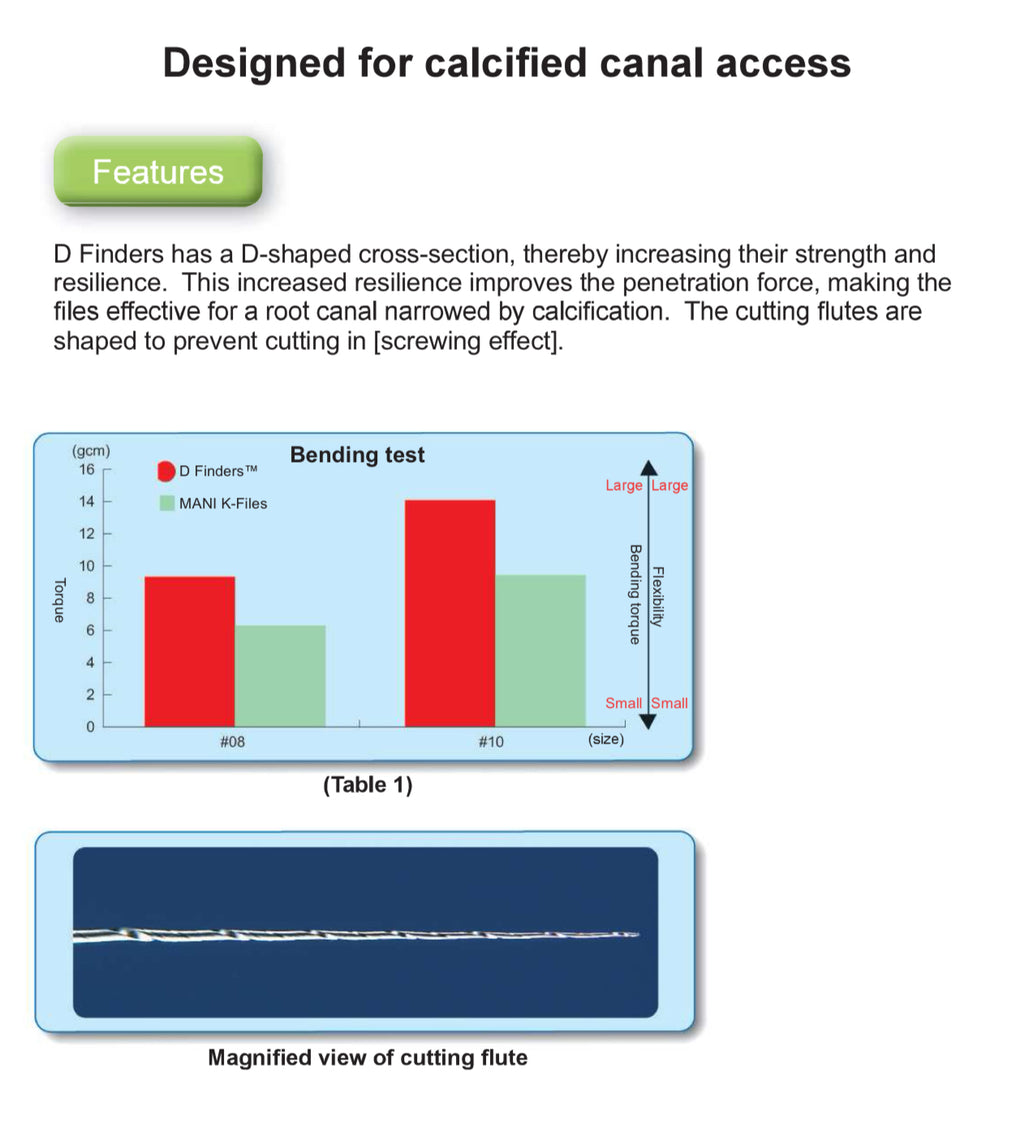
- D-shaped cross-section for increased stiffness
- Helps establish initial canal patency
- Supports glide path preparation before rotary instrumentation
- Japanese MANI manufacturing quality
More stiffness without losing feel
D-Finder files are made from specially treated 18-8 MANI Hard-Fiber stainless steel. The design provides up to 50% more stiffness than conventional K-files and improved fracture toughness for difficult canal negotiation.
- Up to 50% higher stiffness than conventional K-files
- Up to 1.5× higher fracture toughness than many competitor files
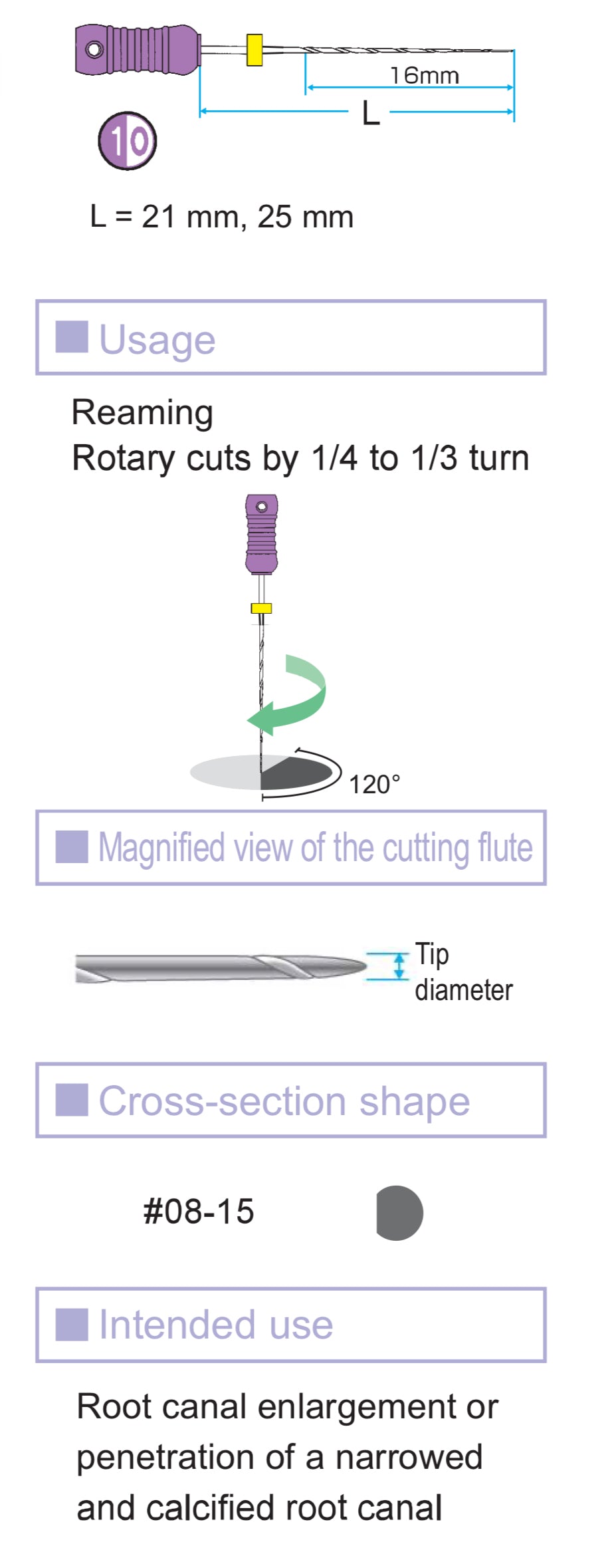
- 16 mm cutting flutes
- Hybrid cutting/non-cutting safety tip
- Mirror-polished finish for corrosion resistance and cleaning
Toothsaver clinical view
D-Finder files are a vital part of an endodontic workflow. When a canal is challenging to negotiation, the right hand file can navigate impediments and achieve patency. When you feel the soft spot, you can push on this file harder than most competitor files and be able to penetrate without buckling. The Size 8 21mm file is really useful for this and can also be used in the 10:1 reciprocating handpiece.
Toothsaver stocks products selected for real clinical usefulness. MANI D-Finders fit that approach because they solve a specific problem: safer, more controlled negotiation of calcified and difficult canals.
Which D-Finder size should I choose?
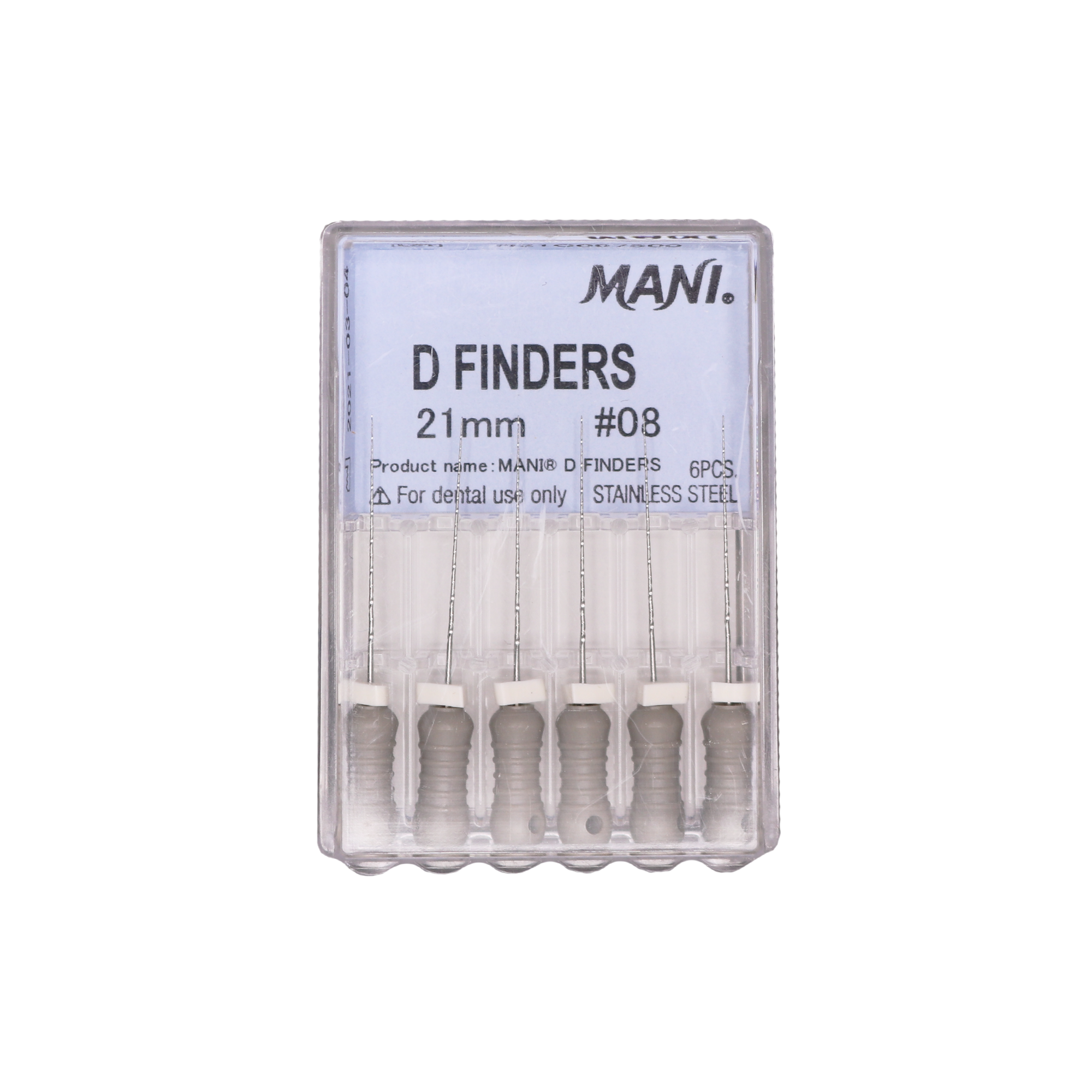
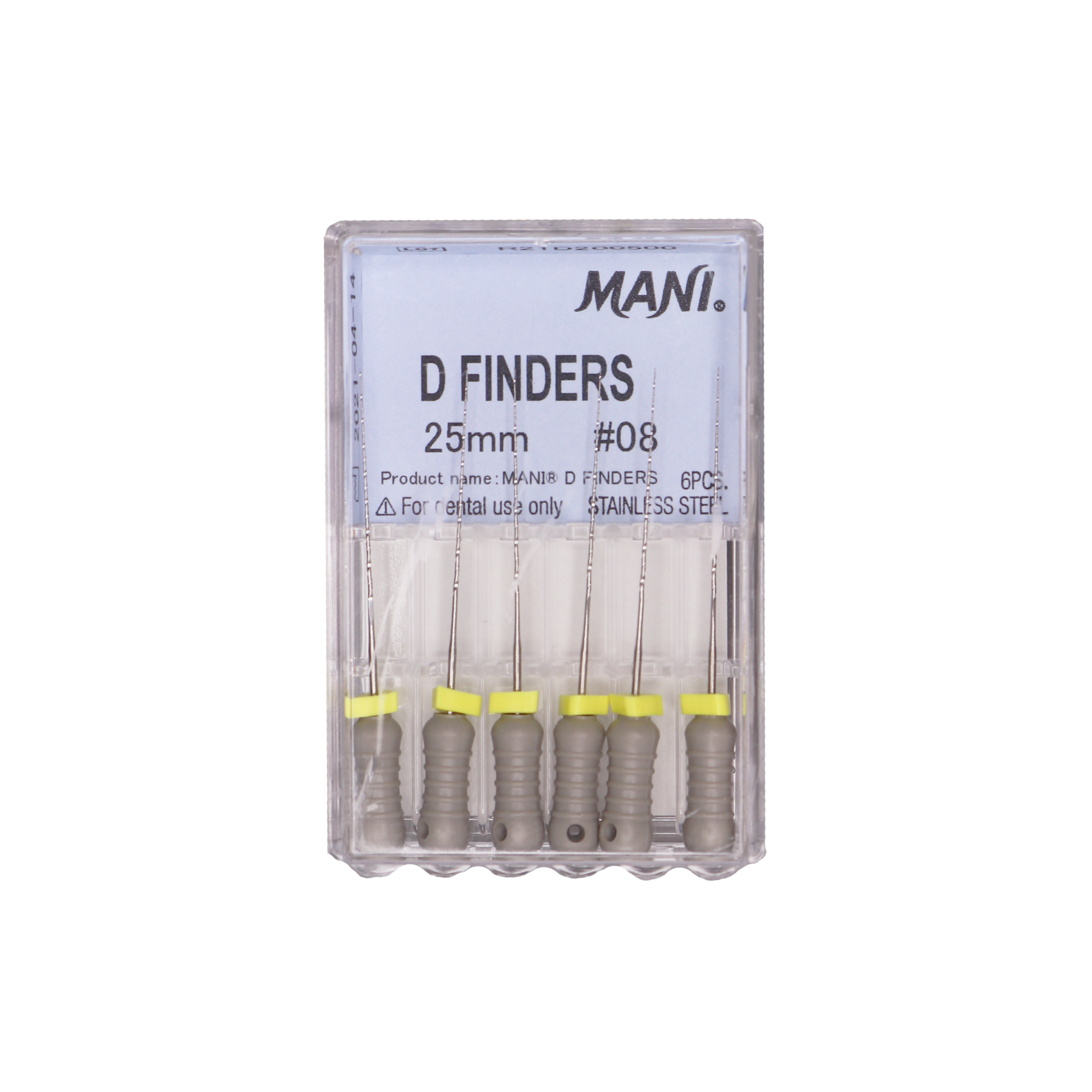
Size 08
Best for: Very narrow or initially un-negotiated canals.
Clinical note: Often the first choice when the canal is tight, calcified or not accepting a standard file.
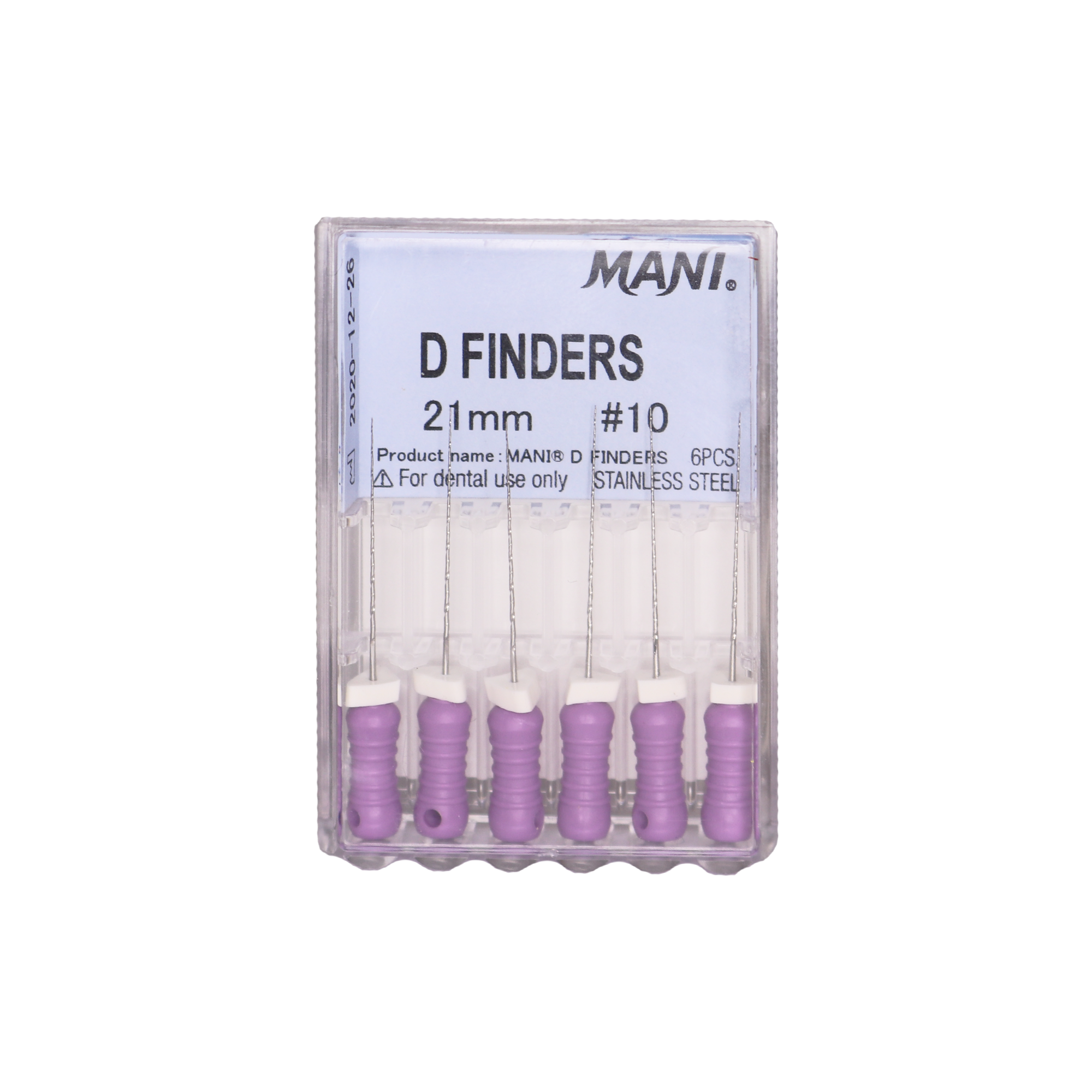
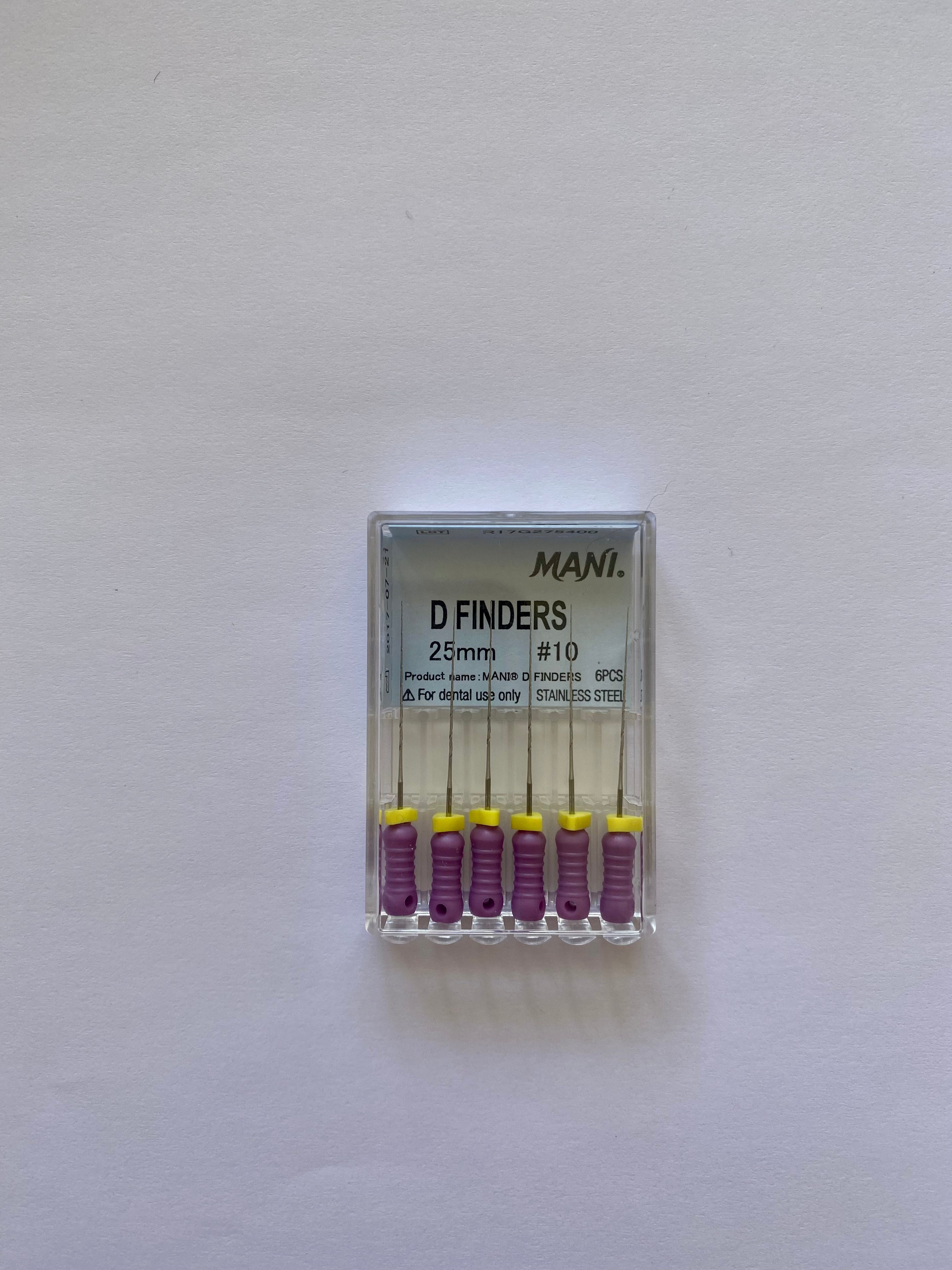
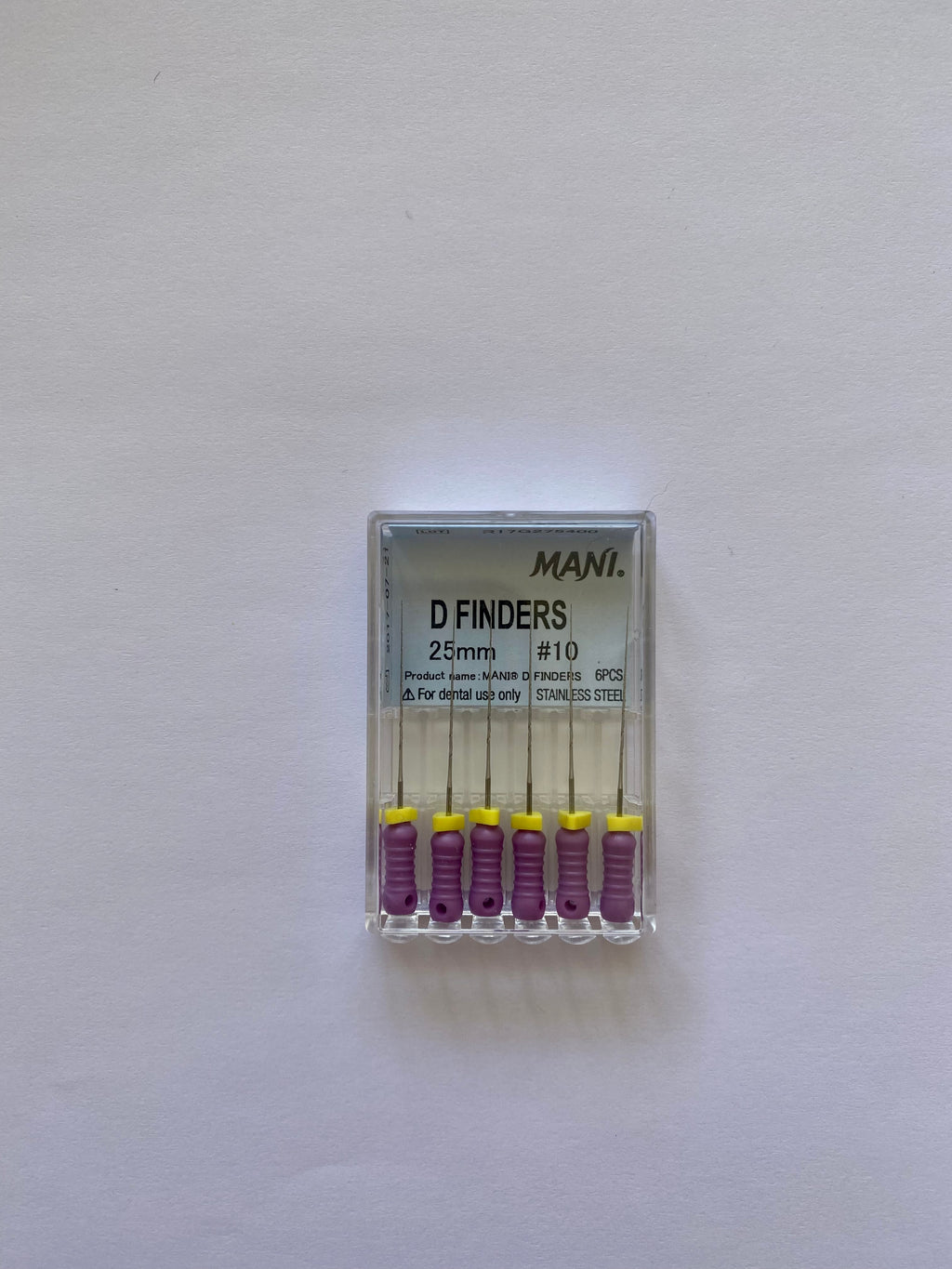
Size 10
Best for: Initial patency and early glide path development.
Clinical note: A useful step once the canal begins to accept a small negotiating file.
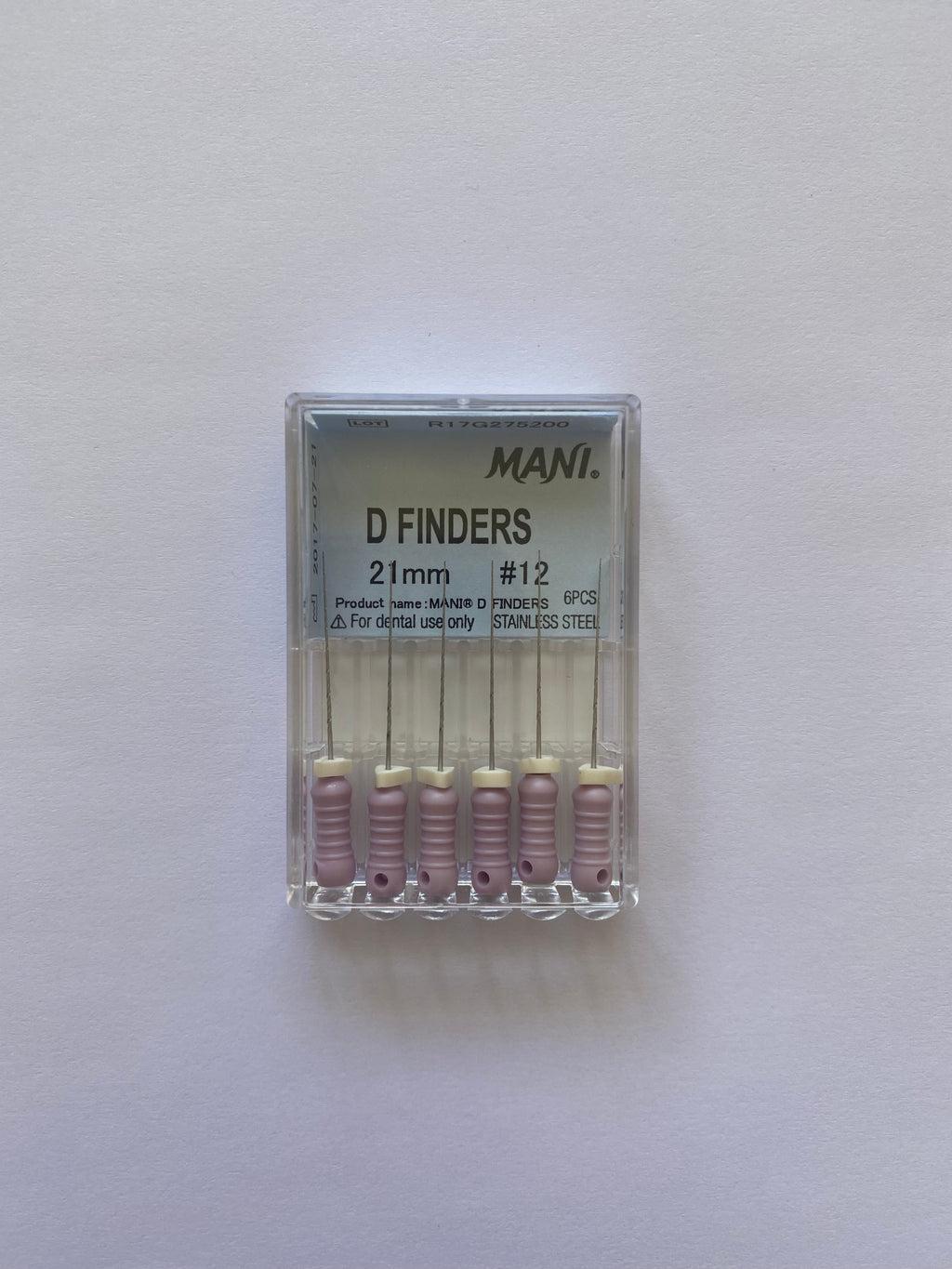
Size 12
Best for: Progressive enlargement after sizes 08 and 10.
Clinical note: Helps bridge the jump between a small negotiating file and size 15 preparation.
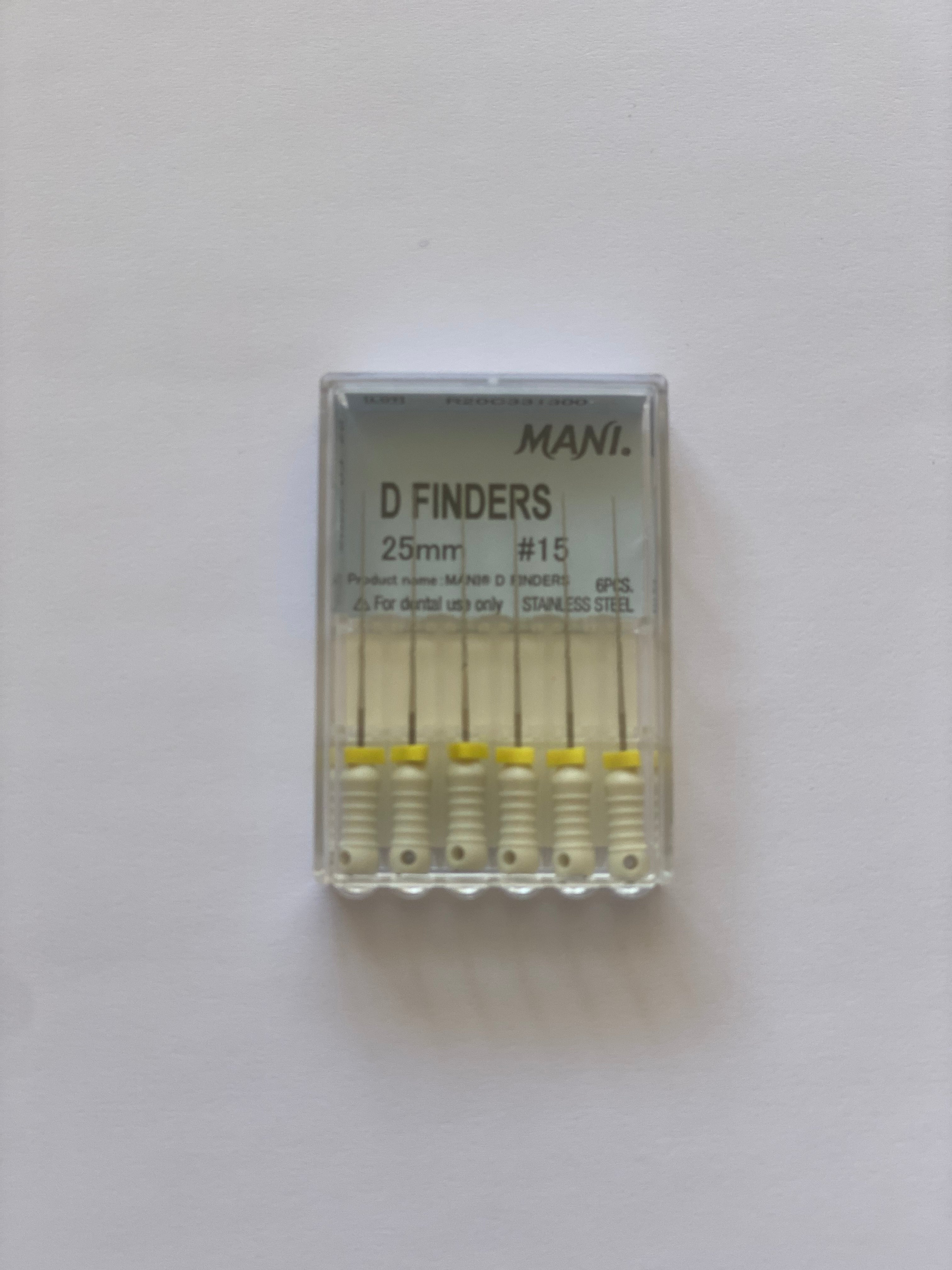
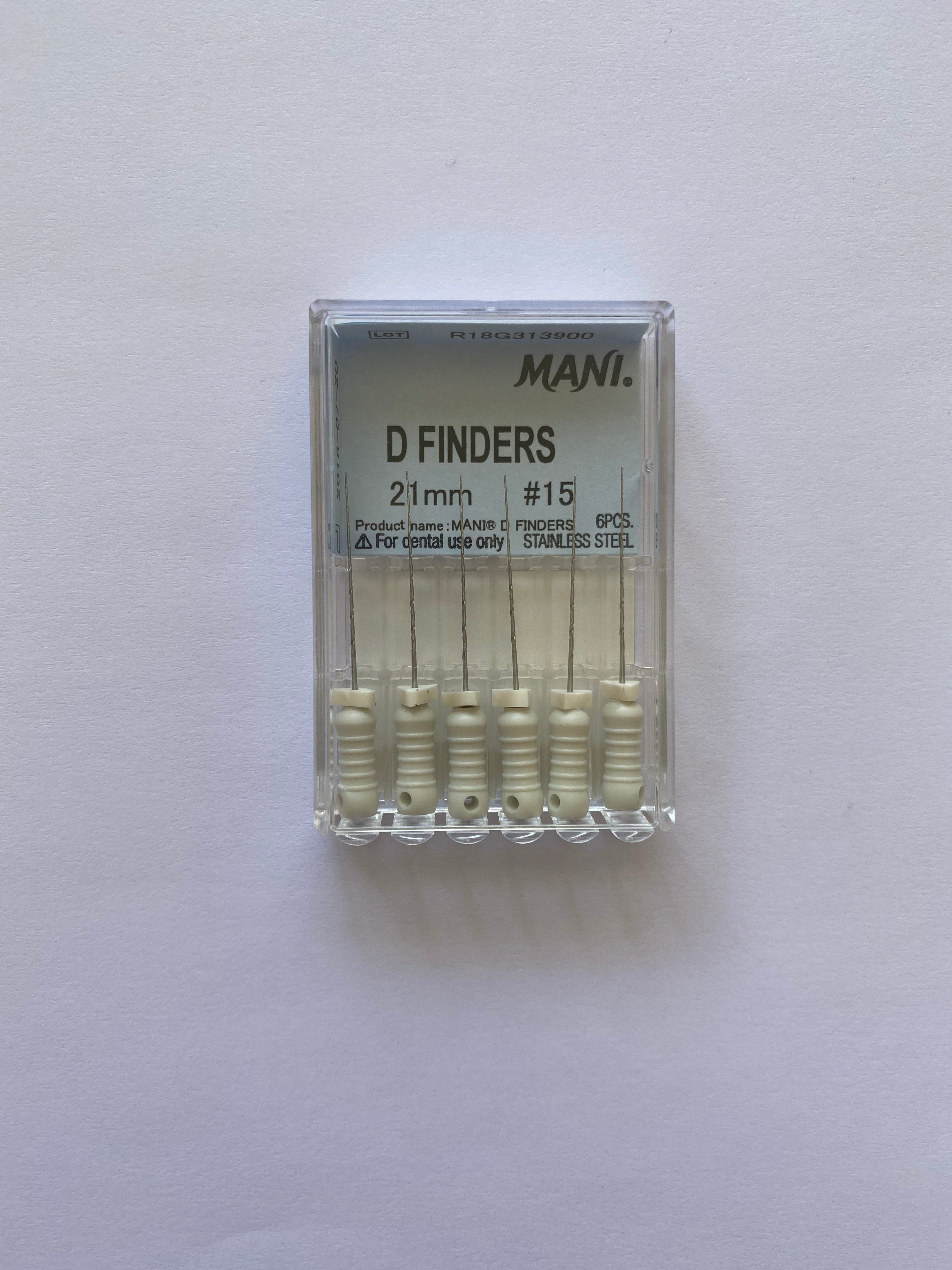
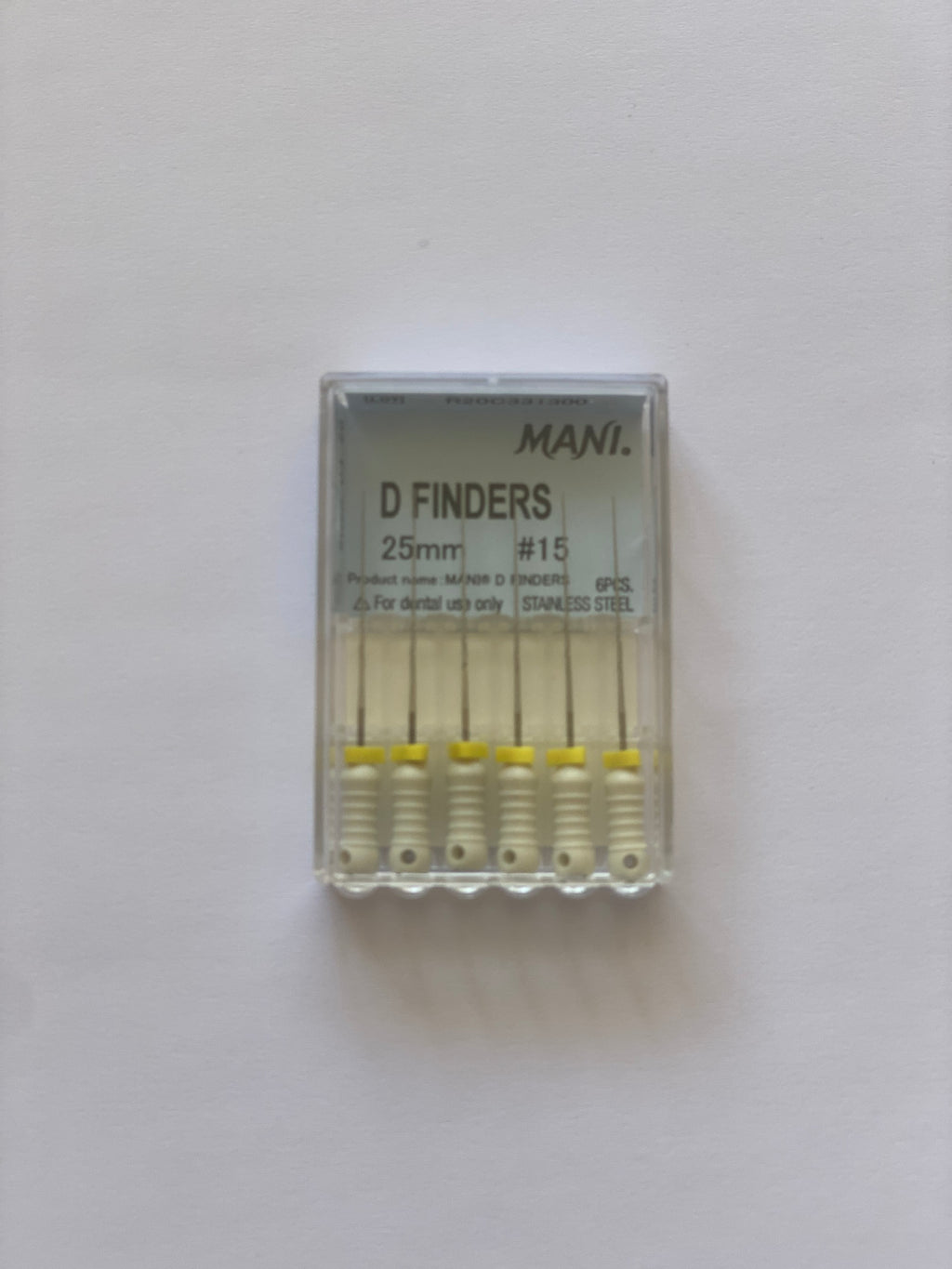
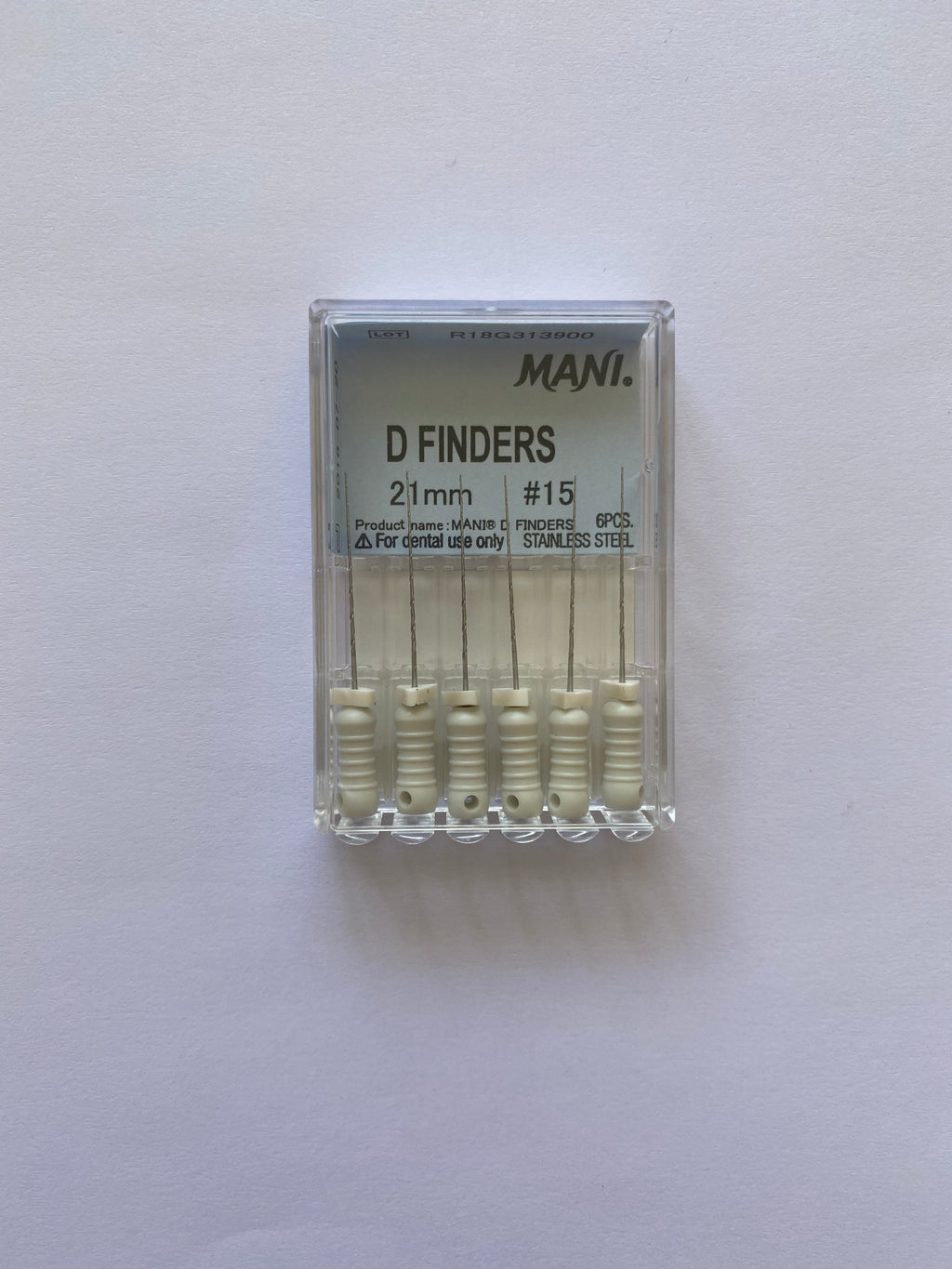
Size 15
Best for: Confirming a more secure manual glide path before rotary shaping.
Clinical note: Useful before moving to rotary glide path or shaping systems.
Clinical technique
D-Finder files are designed to be used with controlled ¼ to ⅓ reaming turns, frequent irrigation and careful tactile feedback. The hybrid safety tip and 16 mm cutting flutes are designed to support patency while reducing the risk of canal transportation.
- Use gentle ¼ to ⅓ reaming turns
- Irrigate frequently
- Avoid forcing the file apically
- Recapitulate and confirm patency
- Progress through sizes gradually
D-Finder vs conventional K-file
- Cross-section: D-shaped rather than standard square or triangular designs.
- Stiffness: up to 50% greater than conventional K-files.
- Fracture toughness: up to 1.5× higher than many competitor files.
- Best use: calcified, narrowed and highly curved canals.
- Clinical role: negotiation and glide path preparation, not routine shaping.
Important clinical note
D-Finder files are intended for canal negotiation, enlargement and glide path preparation. They should be used with appropriate endodontic training, magnification where possible, frequent irrigation and careful tactile control.
In very calcified canals, avoid excessive apical pressure. Progression should be gradual and guided by canal anatomy, radiographic findings and clinical judgement.
Indications
- Penetration of narrowed root canals
- Negotiation of calcified canals
- Highly curved or restricted canal anatomy
- Initial root canal enlargement
- Manual glide path preparation before rotary instrumentation
- Cases where conventional K-files lack sufficient stiffness
FAQs
What are MANI D-Finder files used for?
MANI D-Finder hand files are used to negotiate narrow, calcified and curved root canals, helping clinicians establish patency and prepare a manual glide path before rotary instrumentation.
How are D-Finders different from standard K-files?
D-Finder files have a D-shaped cross-section, giving up to 50% more stiffness than conventional K-files. This helps improve penetration force in difficult canals while preserving tactile feedback.
What sizes are available?
MANI D-Finder files are available in ISO sizes 08, 10, 12 and 15.
What lengths are available?
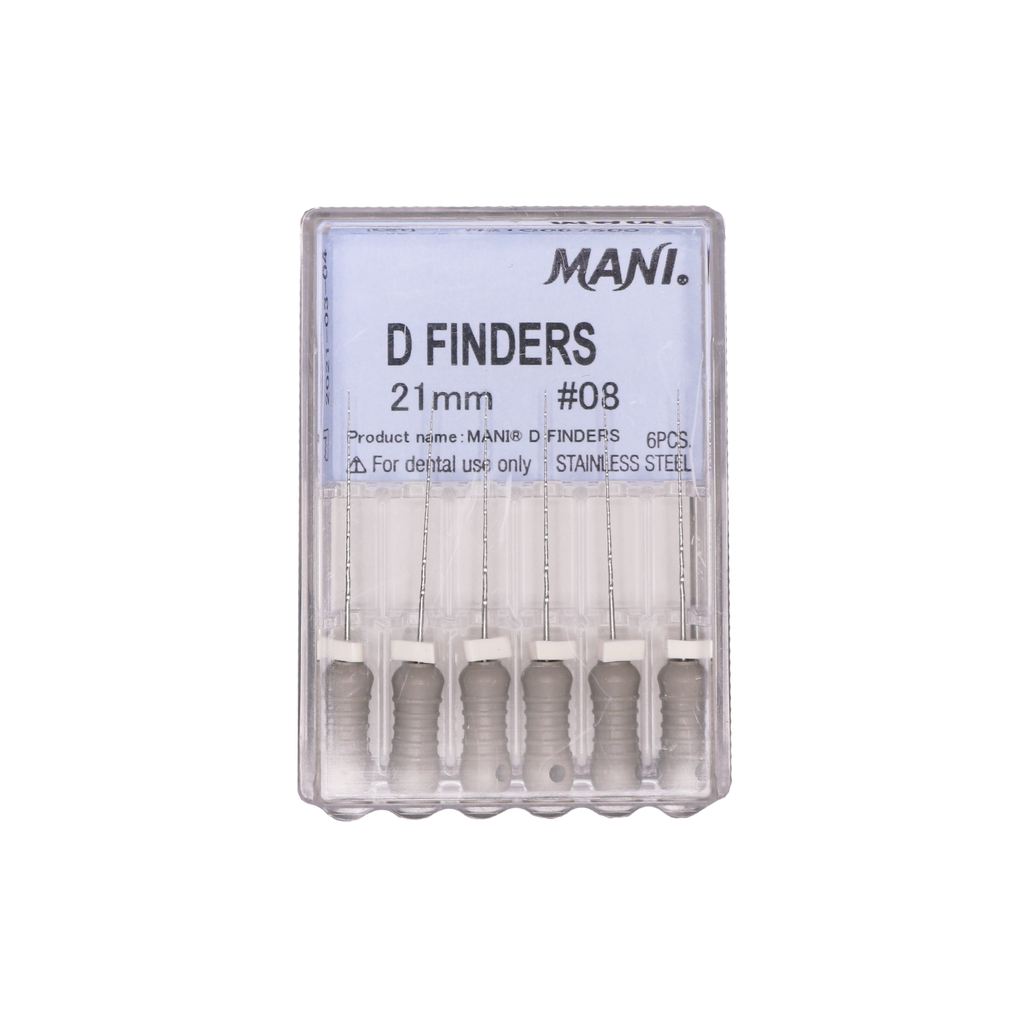
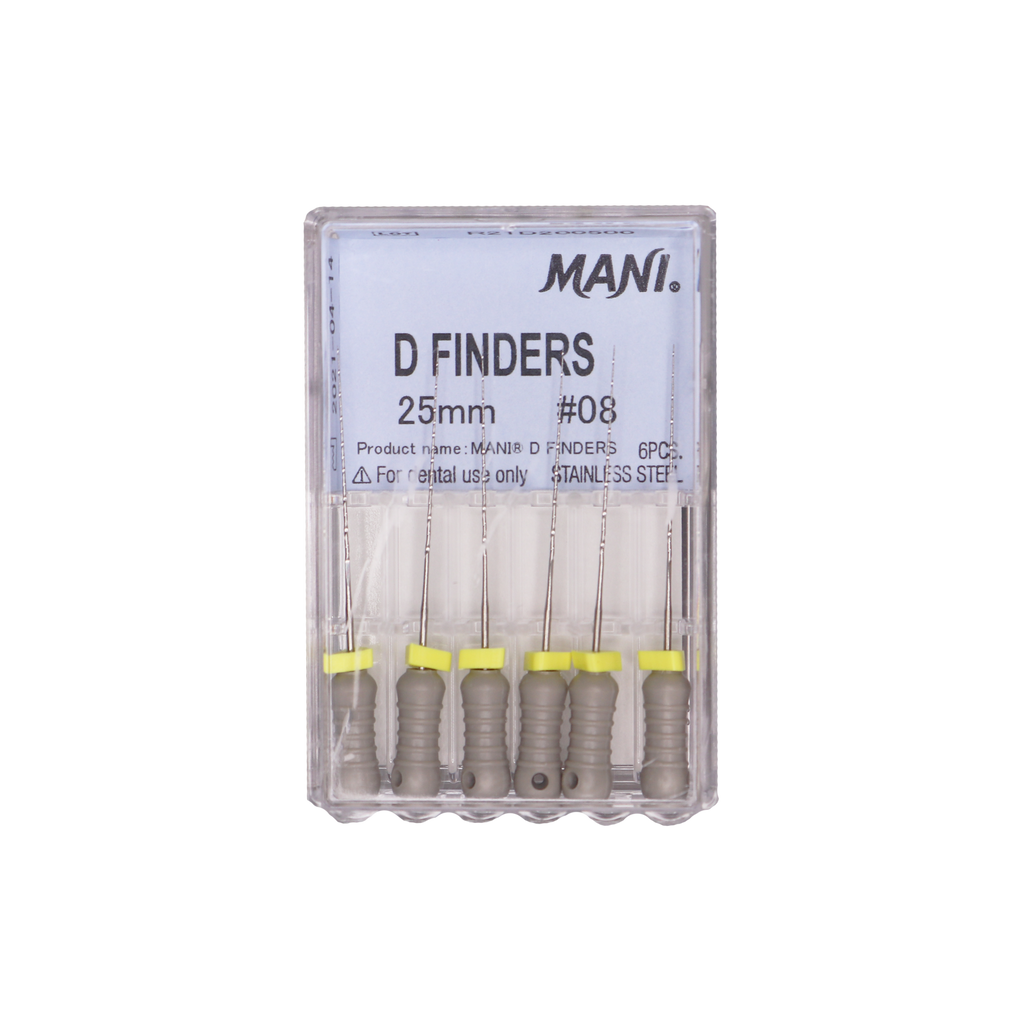
They are available in 21 mm and 25 mm lengths.
How should D-Finder files be used clinically?
Use gentle ¼ to ⅓ reaming turns with frequent irrigation and careful tactile feedback. Avoid forcing the file and progress gradually according to canal anatomy.
Are D-Finders suitable for calcified canals?
Yes. Calcified, narrowed and difficult-to-negotiate canals are one of the main indications for MANI D-Finder files.
Complete your canal negotiation workflow
Pair MANI D-Finders with hand files, glide path systems, endo motors and irrigation products selected by Toothsaver.
Endodontic files Hand files Endo motors Irrigation Apex locators Ultrasonic tips

Ask Our Expert - Dr Daniel Flynn, Specialist Endodontist