


Payment & Security
Your payment information is processed securely. We do not store credit card details nor have access to your credit card information.
Description
Modern endodontic irrigation simplification
Dual Rinse® HEDP for Continuous Cleaning, Chelation & Canal Conditioning
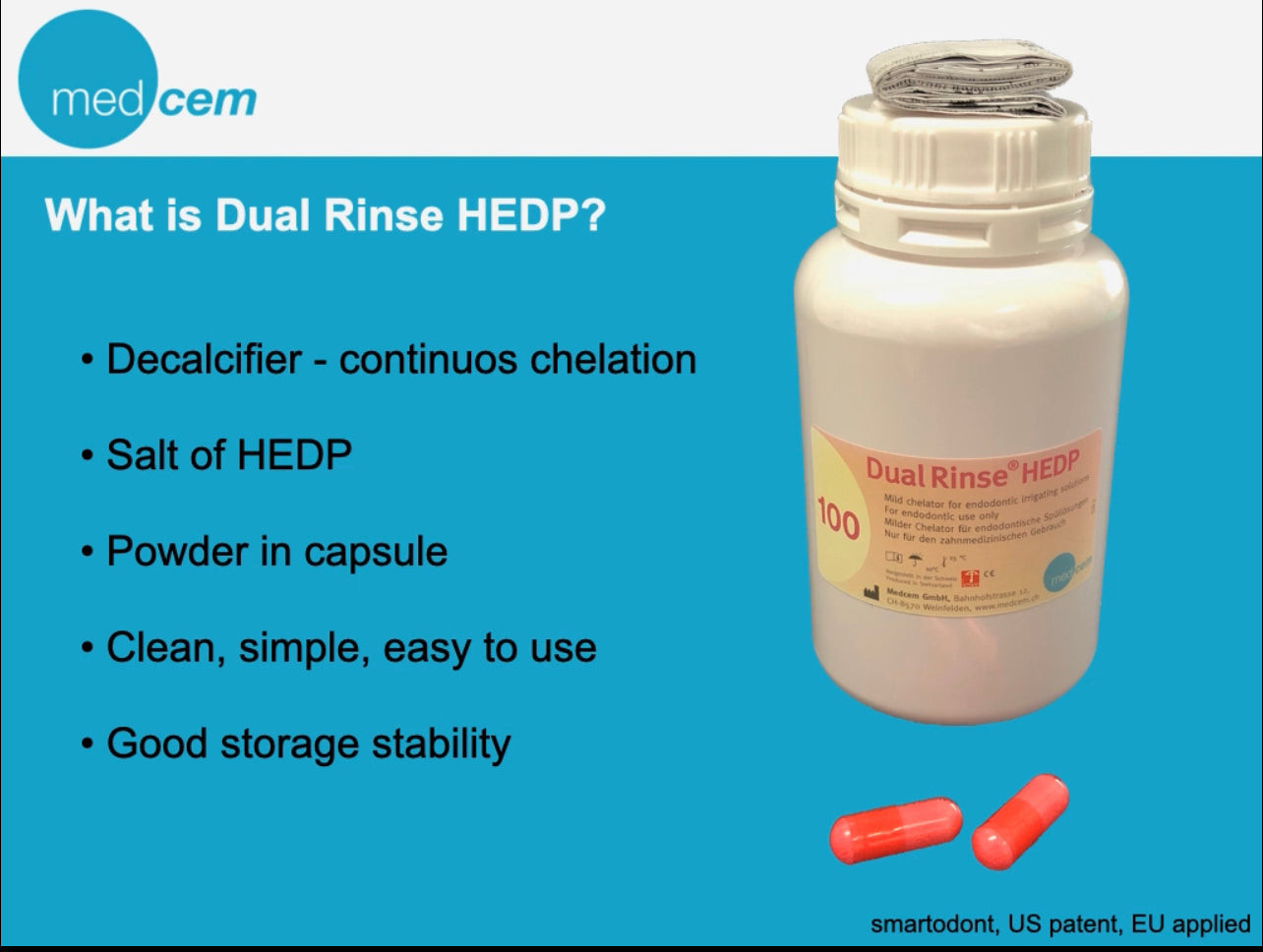
Dual Rinse® HEDP is a mild chelating endodontic irrigant additive designed to be mixed with sodium hypochlorite immediately before treatment. It simplifies irrigation by allowing continuous cleaning, disinfection and canal wall conditioning during instrumentation and final irrigation.
Simplify the irrigation sequence
Dual Rinse® HEDP is designed to reduce the need for complicated alternating irrigation sequences. Once mixed with sodium hypochlorite, the solution can be used during instrumentation and also as a final irrigant.
- Designed for continuous canal cleaning
- Helps reduce smear layer formation during preparation
- Conditions the canal wall before obturation
- Can simplify NaOCl and chelator sequencing
- Useful in routine and complex endodontic treatment
Compatible with sodium hypochlorite
Unlike traditional EDTA-style sequencing, Dual Rinse® HEDP is formulated for compatibility with sodium hypochlorite. The powder is mixed immediately before treatment with the NaOCl solution of your choice.
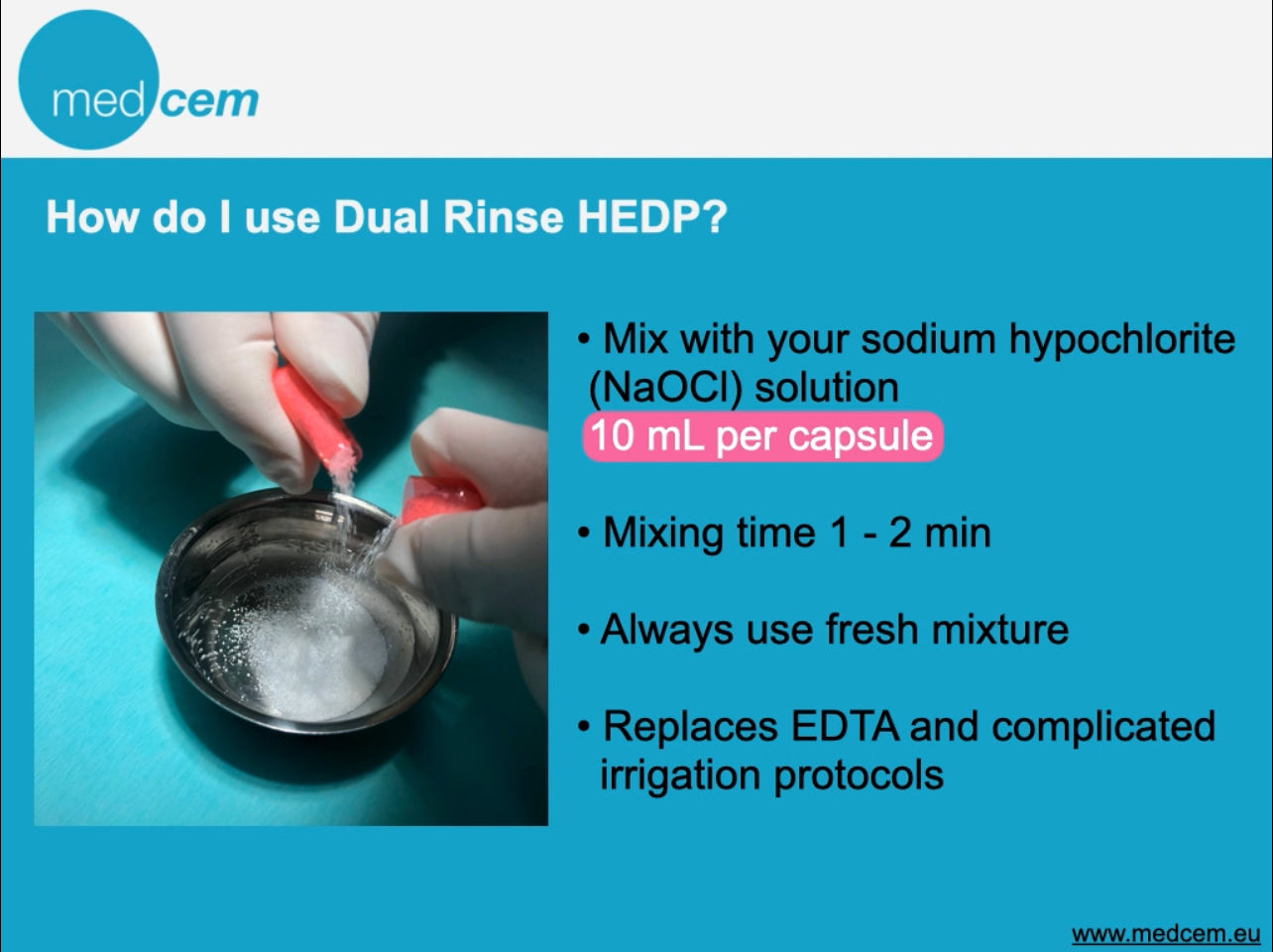
- Mix one capsule with 10 ml NaOCl
- Use the mixed solution within 1 hour
- Maintains the desired NaOCl properties
- Can be used throughout instrumentation
- Also suitable as a final irrigant
Toothsaver clinical view
Irrigation is one of the most important stages of endodontic treatment, yet traditional protocols can become unnecessarily complex. Dual Rinse® HEDP is useful because it helps clinicians simplify the workflow while maintaining cleaning, disinfection and canal conditioning throughout the procedure. Just use one syringe, irriflex needle combined with activation method of choice.
Toothsaver stocks products that are selected for clinical usefulness, not manufacturer pressure. Dual Rinse® HEDP fits our approach because it supports a more streamlined and predictable endodontic irrigation protocol.
Which Dual Rinse® option should I choose?
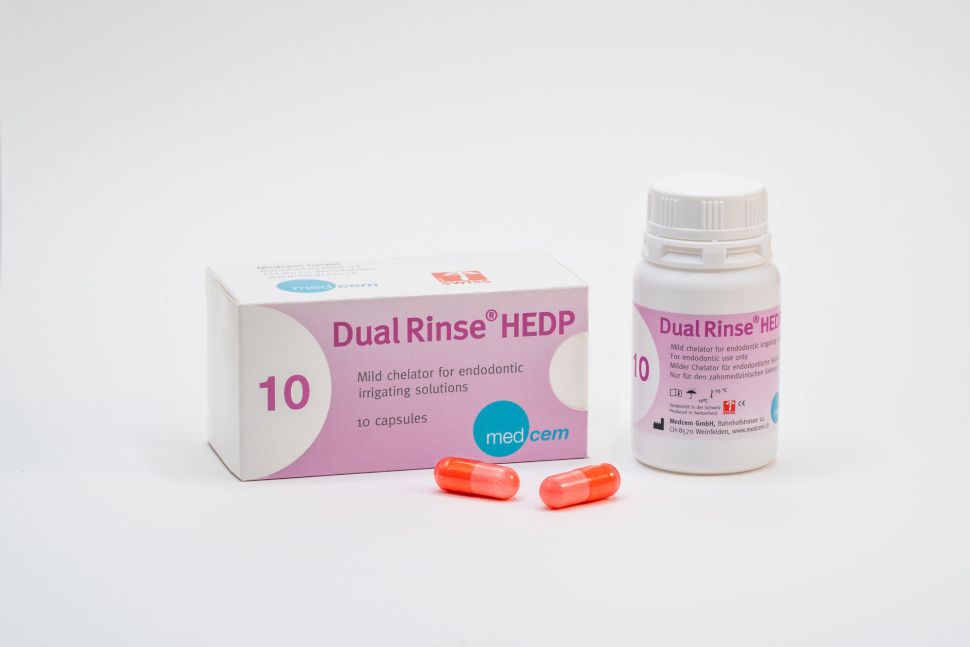
10 capsules
Best for: Trying Dual Rinse® HEDP for the first time or introducing it into selected cases.
Clinical note: A sensible starter option if you want to trial the workflow before committing to larger quantities.
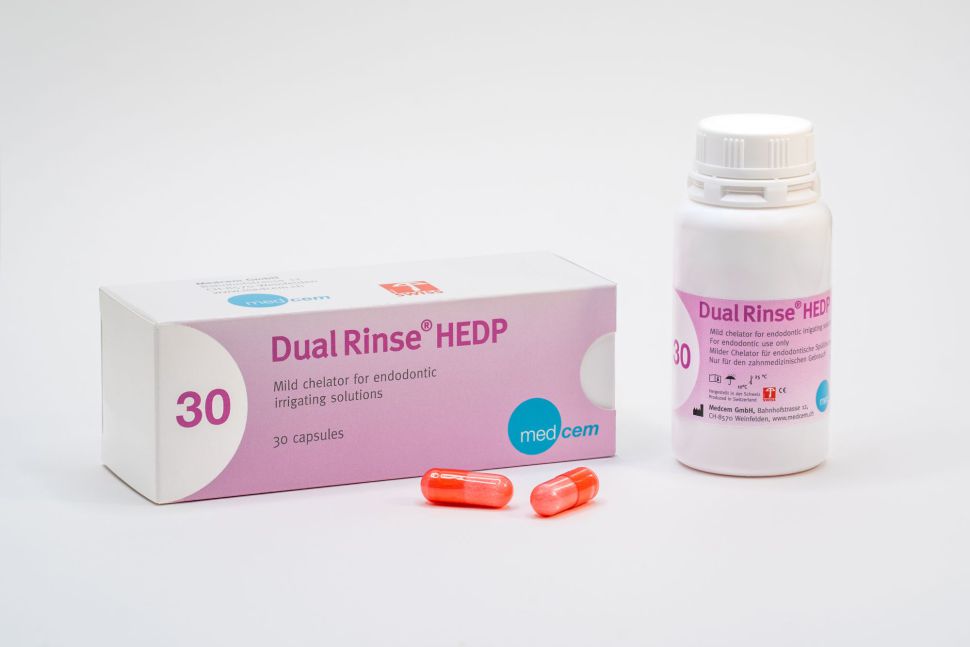
30 capsules
Best for: Regular endodontic use across routine cases.
Clinical note: A practical option for clinicians who are starting to use HEDP routinely in irrigation protocols.
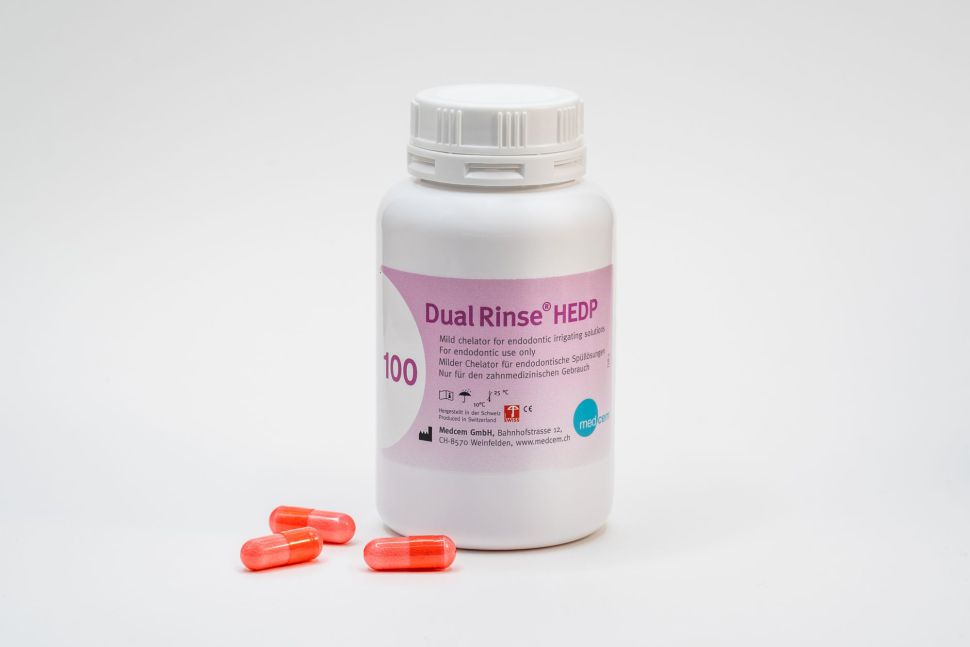
100 capsules
Best for: High-volume endodontic users, referral practices and clinics using Dual Rinse® frequently.
Clinical note: Best value for practices that have already adopted the protocol.
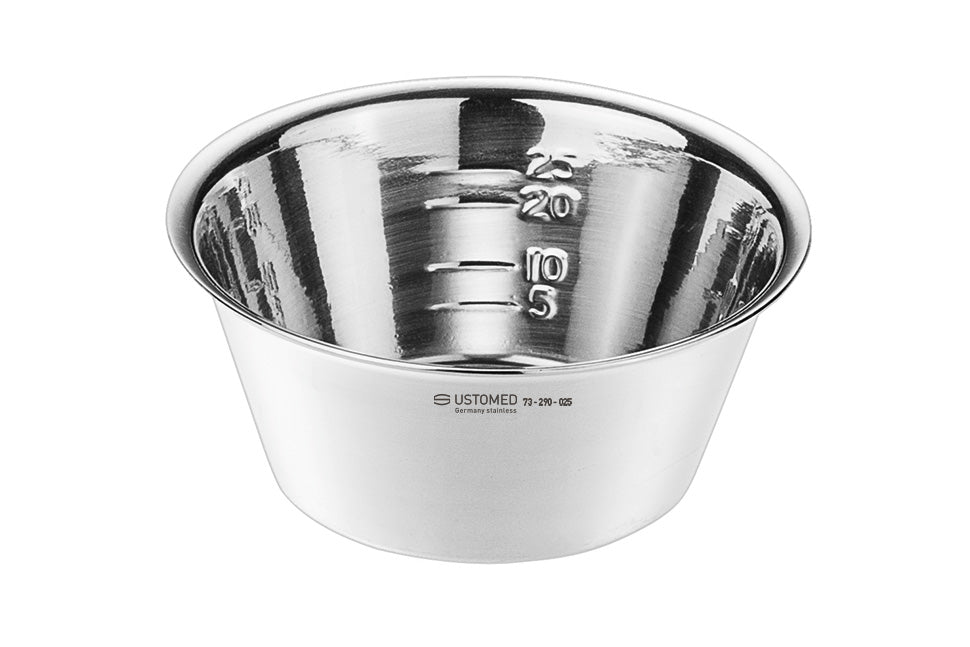
Dual Rinse® mixing bowl
Best for: Measuring and mixing Dual Rinse® HEDP with sodium hypochlorite in a consistent way.
Clinical note: The calibrated bowl is sterilizable and designed for use with the Dual Rinse® workflow.
How to mix Dual Rinse® HEDP
- Place one Dual Rinse® HEDP capsule into the mixing bowl.
- Add 10 ml of the sodium hypochlorite solution of your choice.
- Mix immediately before treatment.
- Draw the mixed solution back into a 10 ml syringe.
- Use the solution during instrumentation and, where appropriate, as a final irrigant.
- Use the mixed solution within 1 hour.
Clinical advantages
- Simpler workflow: reduces switching between separate irrigants.
- Continuous chelation: helps control smear layer formation during shaping.
- NaOCl compatibility: designed to be mixed with sodium hypochlorite.
- Canal conditioning: prepares the canal wall before obturation.
- Reduced instrument stress: may reduce mechanical stress on rotary instruments.
Important clinical note
Mix Dual Rinse® HEDP immediately before treatment. One capsule contains approximately 0.9 g of powder and is designed to be mixed with 10 ml of sodium hypochlorite. The mixed solution should be used within 1 hour.
Dual Rinse® HEDP can also be mixed with sterile physiological saline if a mildly decalcifying solution without proteolytic properties is required.
Why clinicians like Dual Rinse® HEDP
Existing customer feedback highlights cleaner-looking canal systems and pulp chambers, reduced switching between NaOCl and EDTA, and a simpler irrigation workflow. This supports the key clinical appeal of Dual Rinse® HEDP: simplifying irrigation while maintaining continuous cleaning and canal conditioning.
FAQs
What is Dual Rinse® HEDP?
Dual Rinse® HEDP is a mild chelating irrigant additive used in endodontics. It is mixed with sodium hypochlorite immediately before treatment to support cleaning, disinfection and canal wall conditioning.
How do you mix Dual Rinse® HEDP?
Mix one capsule with 10 ml of sodium hypochlorite immediately before treatment, then draw the solution into a 10 ml syringe for use during instrumentation and final irrigation.
How long is the mixed Dual Rinse® solution useful for?
The mixed Dual Rinse® HEDP and sodium hypochlorite solution should be used within 1 hour.
Can Dual Rinse® HEDP replace EDTA in an irrigation sequence?
Dual Rinse® HEDP is designed to simplify irrigation by providing mild chelation while being compatible with sodium hypochlorite. Clinicians should use it according to their training, clinical judgement and the manufacturer’s protocol.
Can Dual Rinse® HEDP be used as a final irrigant?
Yes. The mixed Dual Rinse® HEDP and sodium hypochlorite solution can be used during root canal instrumentation and also as a final irrigant.
What pack sizes are available?
Dual Rinse® HEDP is available in 10, 30 and 100 capsule options. A calibrated mixing bowl is also available.
What does the Dual Rinse® mixing bowl do?
The Dual Rinse® calibrated mixing bowl is a sterilizable bowl designed to help mix Dual Rinse® HEDP with sodium hypochlorite in a consistent clinical workflow.
Complete your endodontic irrigation workflow
Pair Dual Rinse® HEDP with irrigation, activation and obturation products selected by Toothsaver.
Irrigation Ultrasonic devices Ultrasonic tips Endodontic files GP & paper points Sealers & putty

Ask Our Expert - Dr Daniel Flynn, Specialist Endodontist