
Payment & Security
Your payment information is processed securely. We do not store credit card details nor have access to your credit card information.
Description
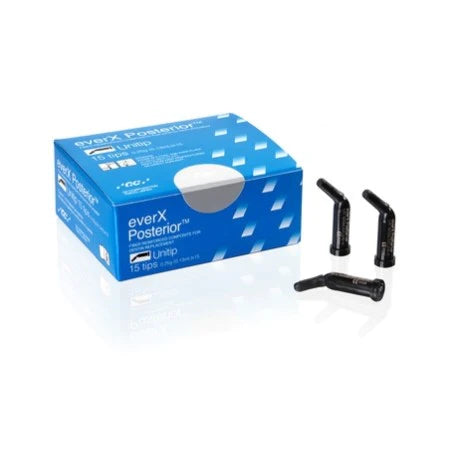
GC everX Posterior • Fibre-reinforced composite • Dentine replacement • Unitips
GC everX Posterior Unitip Fibre-Reinforced Composite
GC everX Posterior is a fibre-reinforced composite for dentine replacement, designed to reinforce large posterior restorations and support weakened tooth structure.
It is used as a reinforced substructure beneath a conventional composite enamel layer, making it particularly useful for large cavities, post-endodontic restorations, cracked teeth and core build-up workflows.
Fibre-Reinforced
Short fibres reinforce the composite substructure in large posterior restorations.
Dentine Replacement
Designed to replace missing dentine beneath a conventional composite enamel layer.
Large Cavity Support
Useful in large posterior cavities, cracked teeth and structurally weakened restorations.
Unitip Delivery
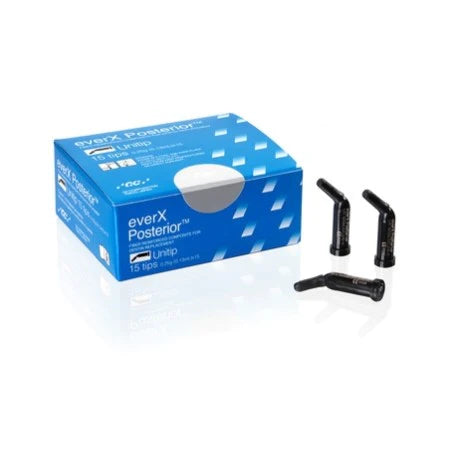
Supplied as 15 × 0.25 g Unitips for convenient controlled placement.
Fibre-reinforced composite for dentine replacement
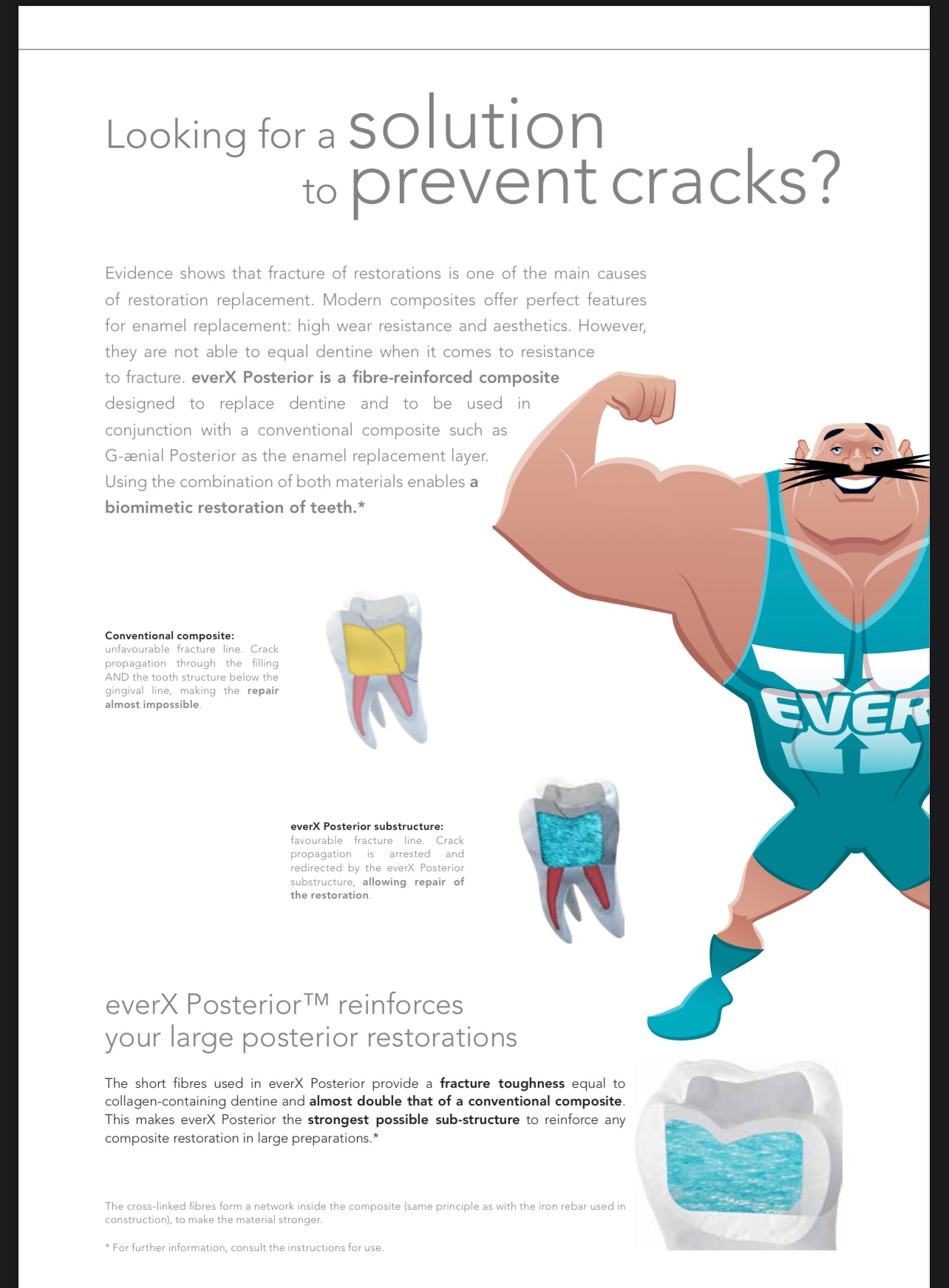
GC everX Posterior is a fibre-reinforced composite designed to be used as a dentine replacement material in posterior teeth.
It is not intended to replace the final enamel or occlusal composite layer. Instead, everX Posterior is used as a reinforcing internal substructure and then covered with a conventional composite, such as a posterior composite or enamel replacement material.
This makes it especially useful in cases where the remaining tooth structure is weakened, where the restoration is large, or where there is concern about crack propagation and fracture risk.
Toothsaver clinician view
EverX Posterior is useful when a restoration needs more than just a conventional composite fill. In large posterior cavities, cracked teeth, cusp replacement cases and post-endodontic restorations, the challenge is often structural support. everX Posterior works as a reinforced dentine core or substructure, helping support the restoration before it is capped with a conventional composite enamel layer.
Why dentists choose everX Posterior
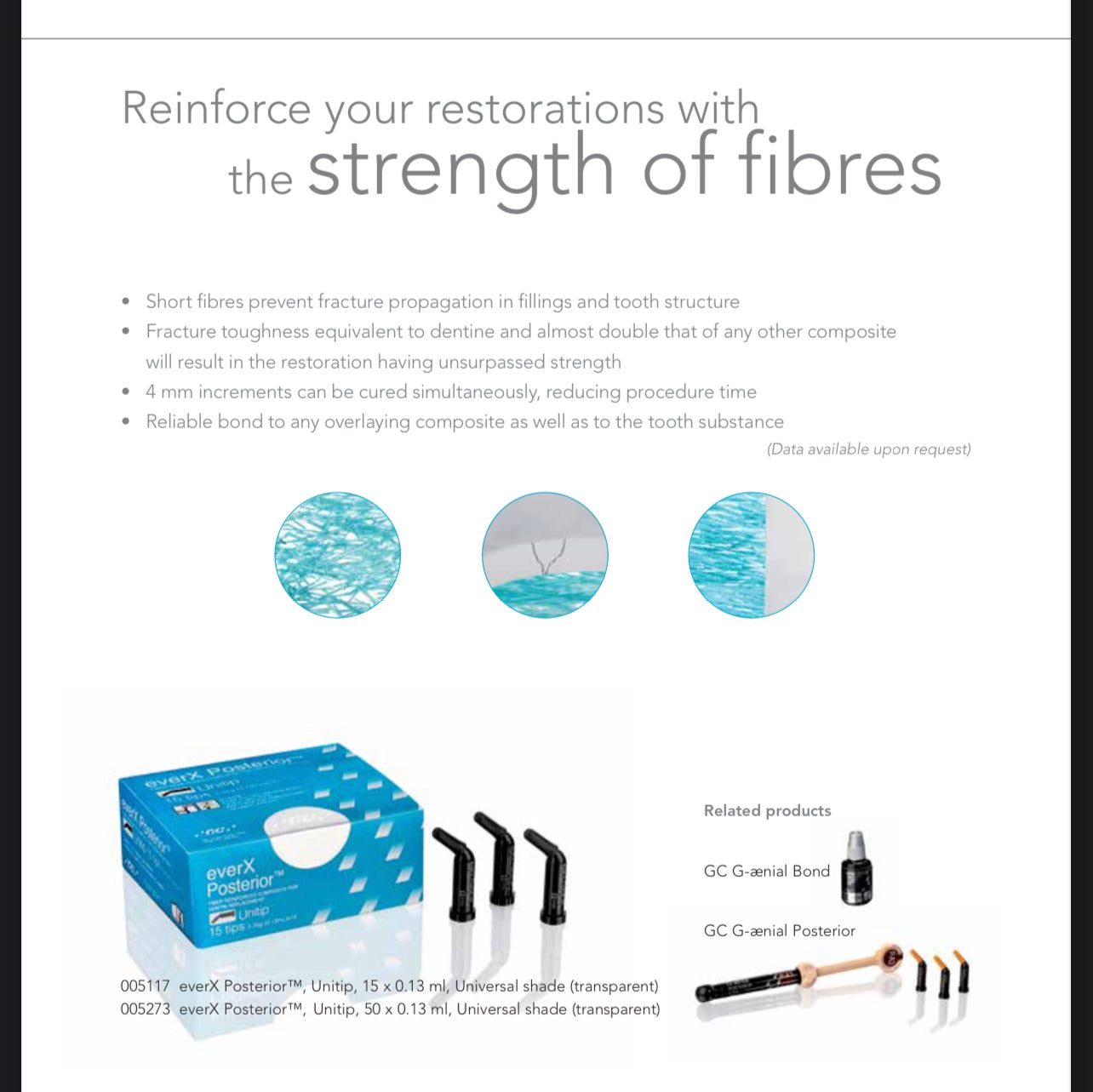
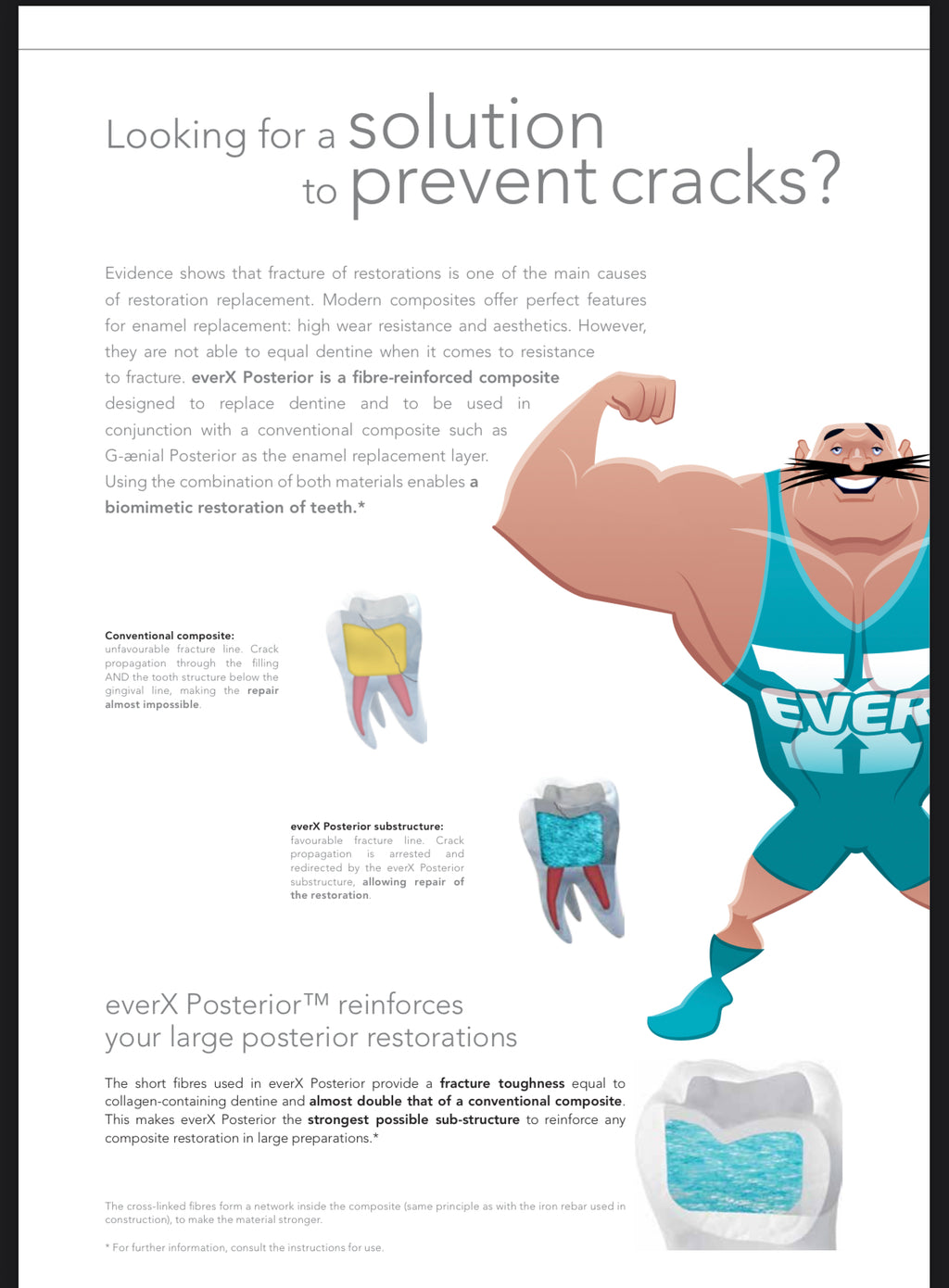
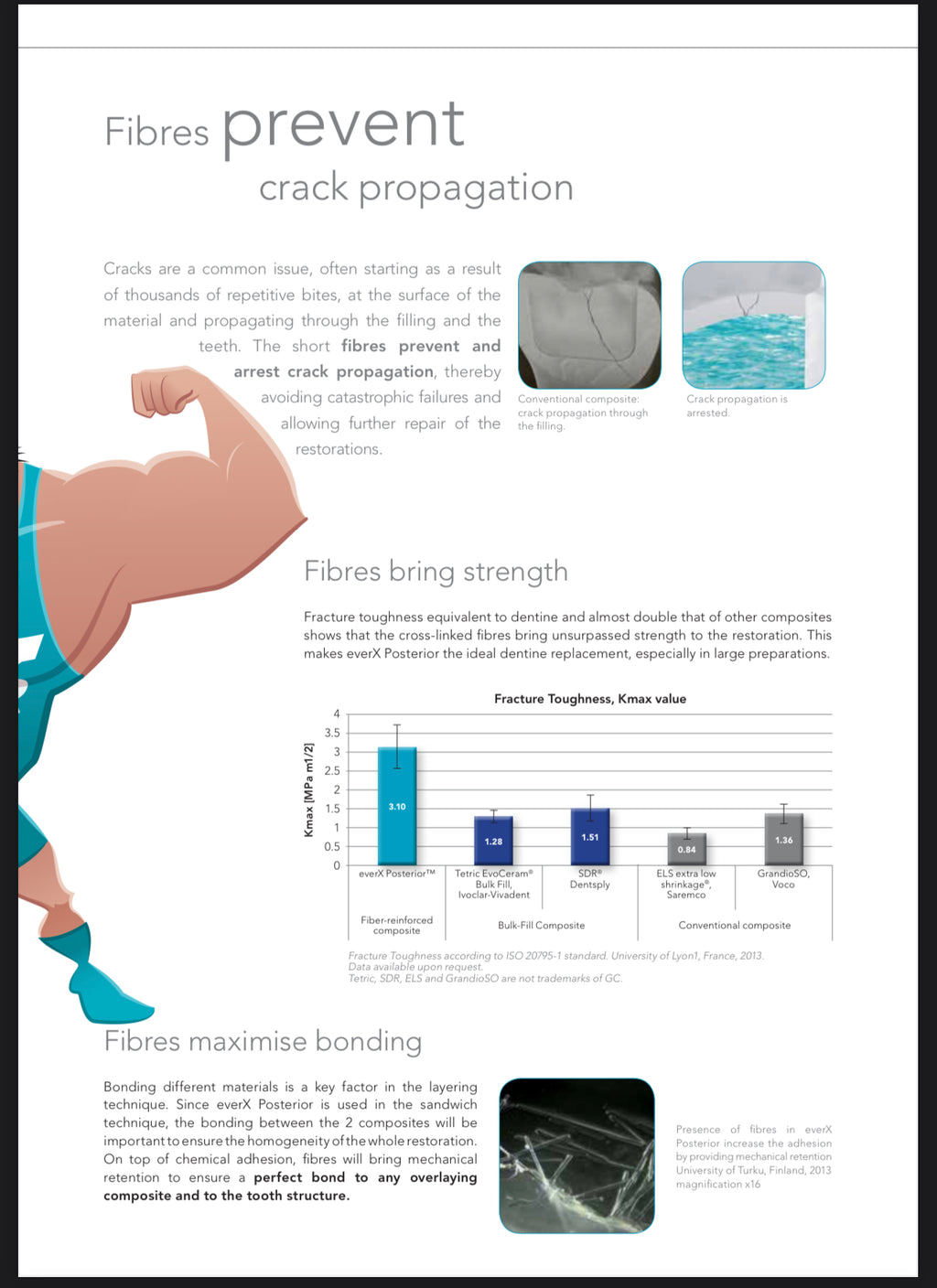
The internal fibre network helps reinforce the composite substructure.
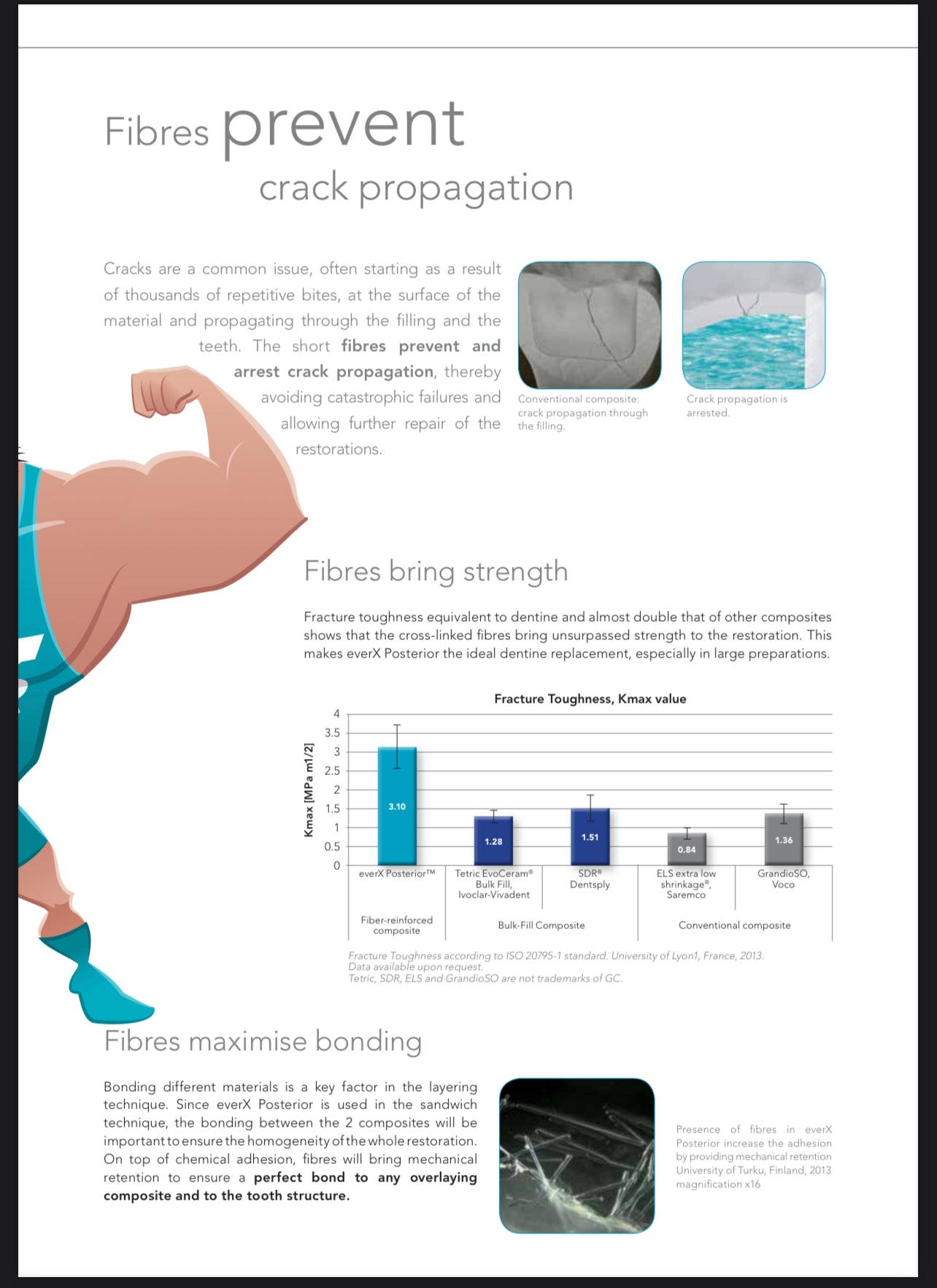
The short fibres are designed to help prevent or stop crack propagation through the filling.
A strong option for large Class I and Class II restorations where reinforcement is desirable.
Designed to replace dentine and be covered by a conventional composite enamel layer.
Useful in root-filled posterior teeth where remaining tooth structure may be weakened.
Unitip delivery supports controlled placement and efficient chairside handling.
Clinical applications
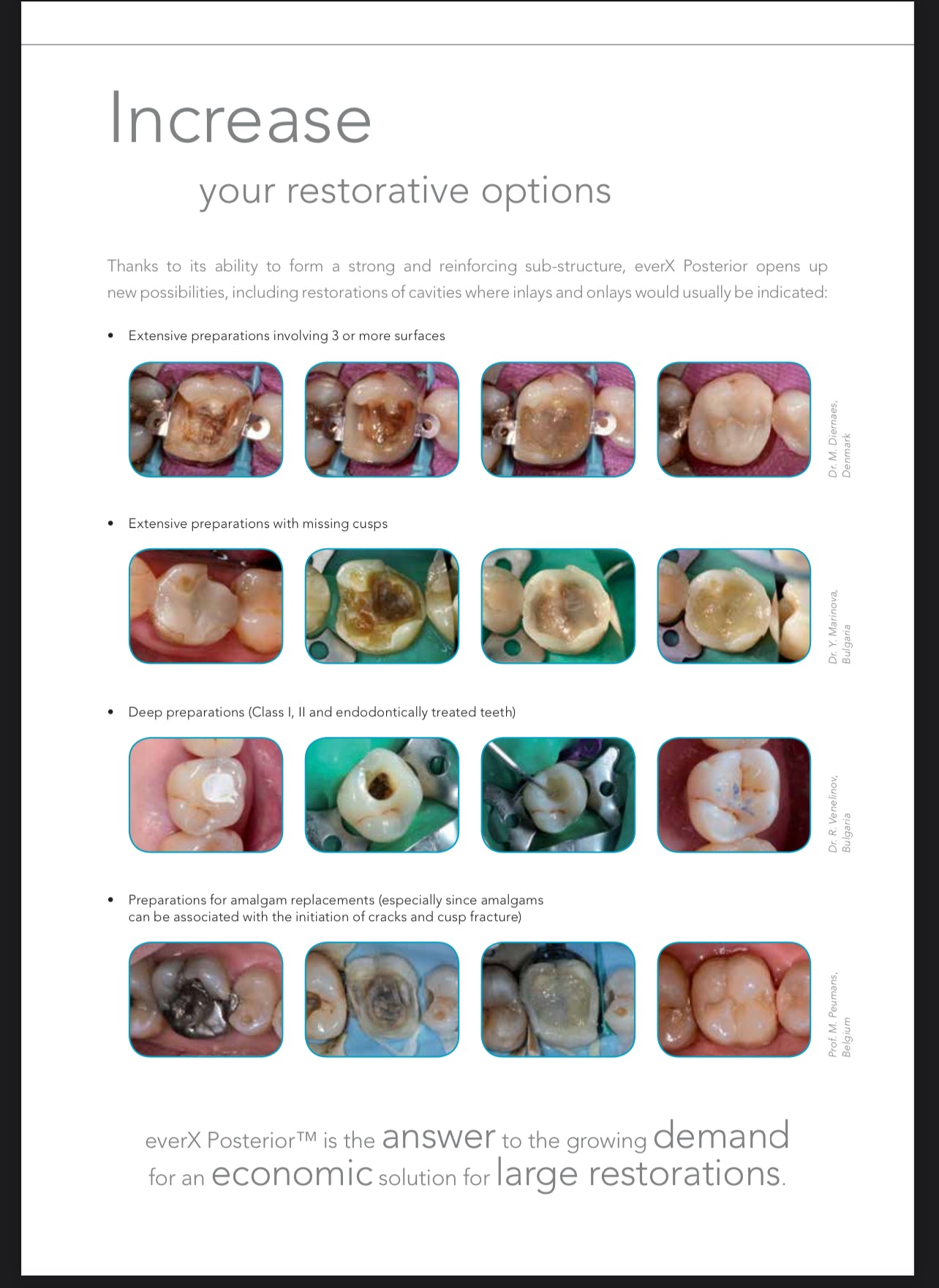
everX Posterior is suitable for restorative cases where internal reinforcement is beneficial.
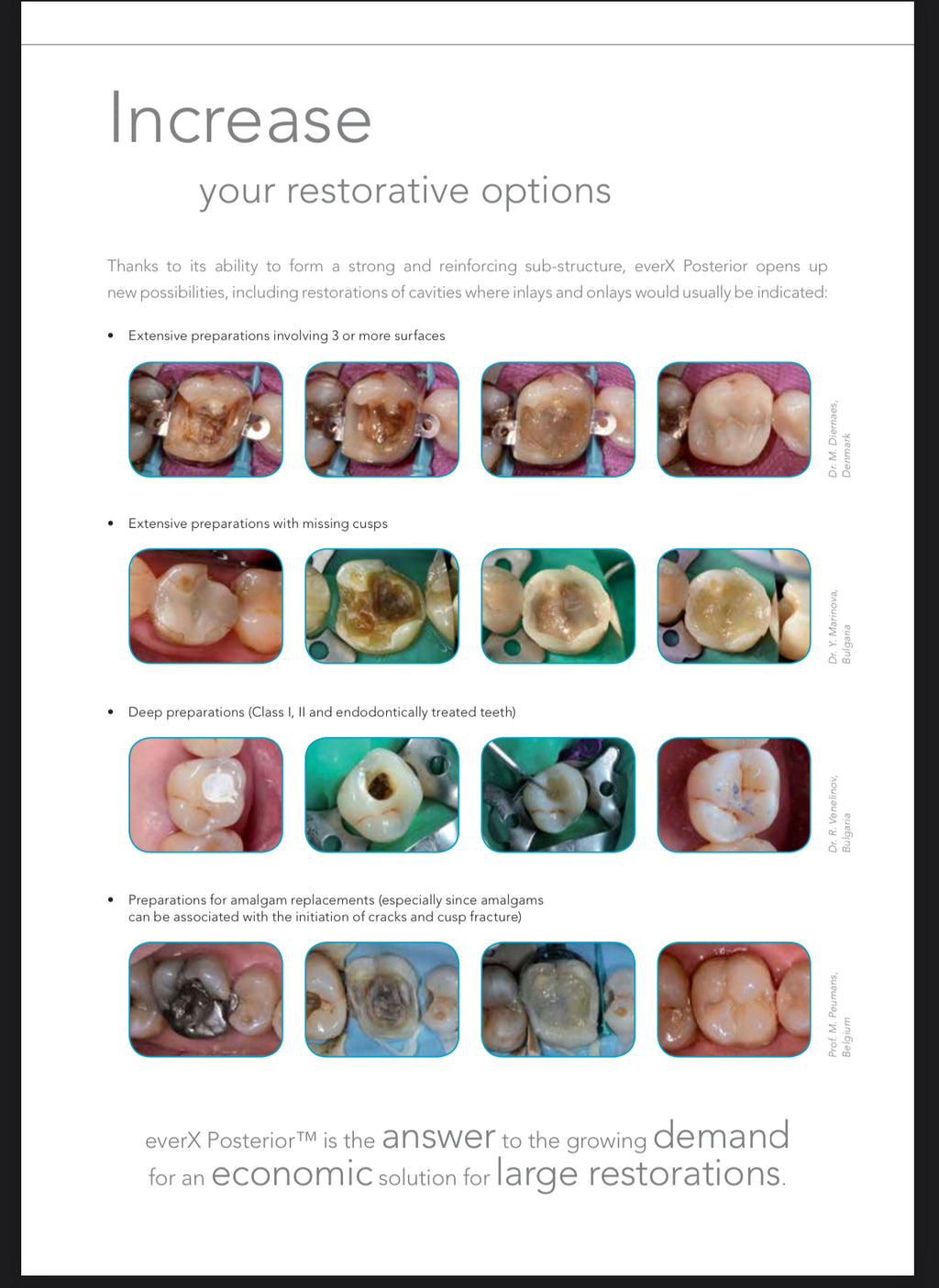
- Large posterior composite restorations
- Class I and Class II cavities
- Deep cavities
- Post-endodontic restorations
- Cracked or weakened teeth
- Cusp replacement cases
- Restorations after amalgam removal
- Core build-up cases
- Dentine replacement beneath conventional composite
- Reinforcing substructure under direct composite restorations
Used as a substructure beneath conventional composite
everX Posterior should be used as the dentine replacement part of the restoration. A conventional composite should then be placed over it as the enamel or occlusal layer.
This layered approach allows the clinician to use everX Posterior for reinforcement internally while still using a conventional composite for occlusal anatomy, polishability, wear resistance and aesthetics.
Main clinical benefit
EverX Posterior reinforces the dentine-replacement part of a restoration, helping support large posterior composite restorations before final capping with conventional composite.
everX Posterior vs everX Flow
Toothsaver stocks both GC everX Posterior and GC everX Flow. Both are fibre-reinforced restorative materials, but they handle differently.
| Product | Handling | Main use |
|---|---|---|
| everX Posterior | Packable fibre-reinforced composite | Dentine replacement and internal reinforcement in posterior restorations. |
| everX Flow | Flowable fibre-reinforced composite | Flowable adaptation in deep cavities, core build-ups and dentine replacement workflows. |
Useful for post-endodontic restorations
Root-filled teeth often have reduced structural integrity due to caries, previous restorations, access cavity preparation and loss of marginal ridges or cusps.
everX Posterior can be used as part of the restorative build-up to reinforce the internal dentine replacement layer before the final composite layer is placed.
Suggested clinical workflow
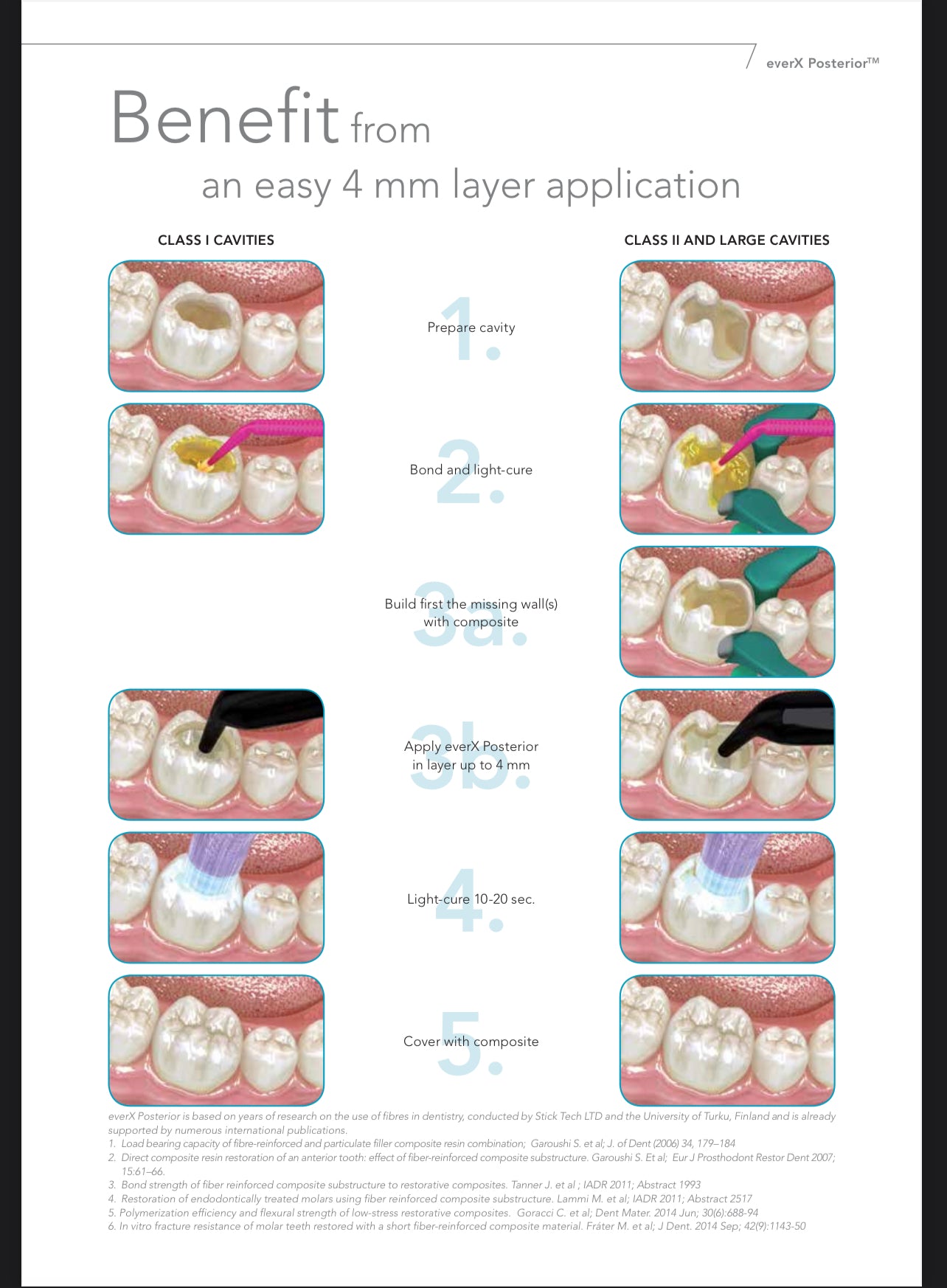
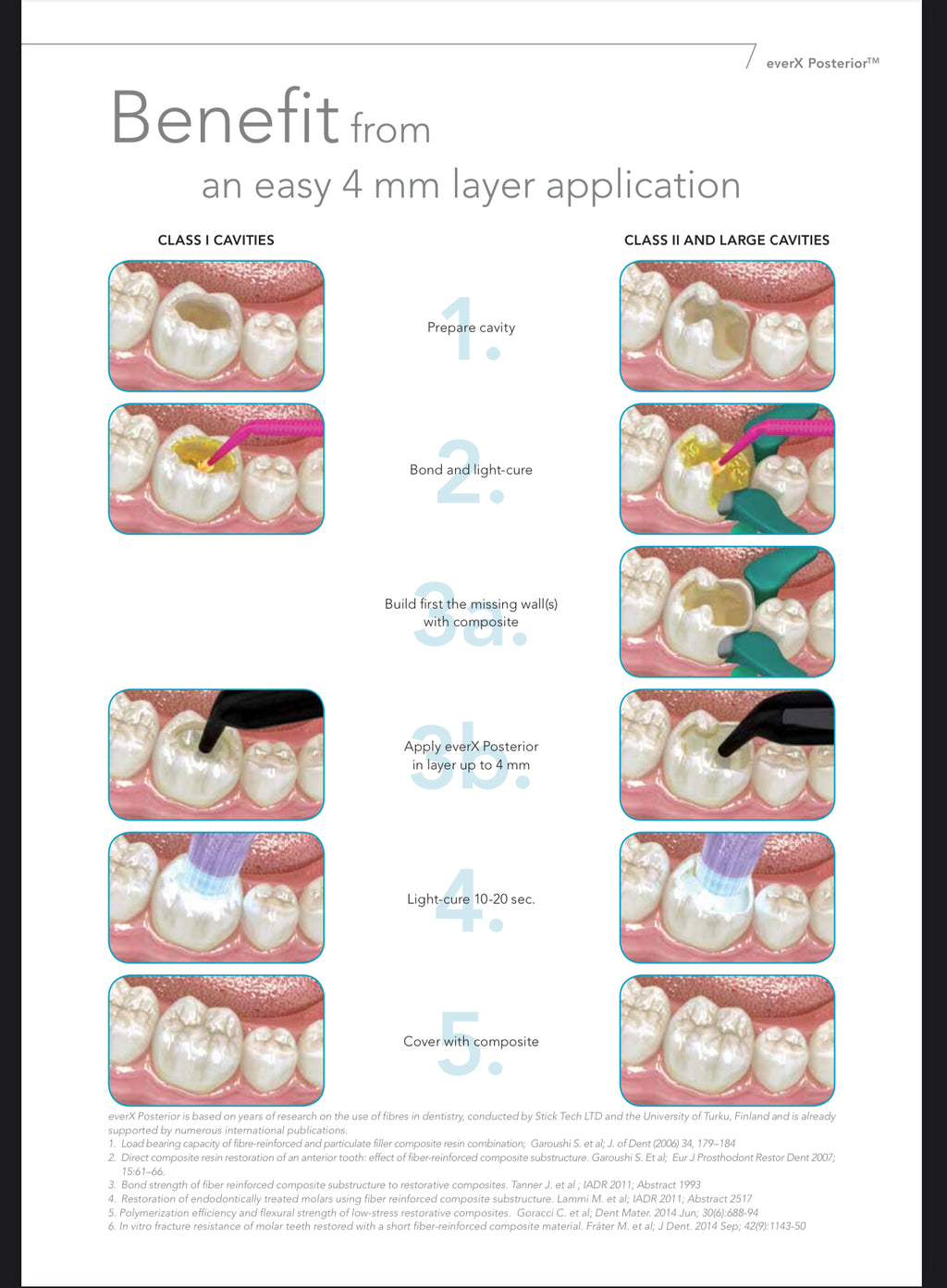
Prepare the cavity and isolate according to your normal adhesive restorative protocol.
Use your chosen adhesive system according to the manufacturer’s instructions.
Place everX Posterior as the reinforced dentine replacement substructure.
Cover with a conventional composite enamel or occlusal layer and finish as usual.
Important clinical note
EverX Posterior is designed as a dentine replacement and reinforcing substructure. It should be covered with a conventional composite layer. Always follow GC’s instructions for use, including bonding, placement, increment and curing recommendations.
Pack contents
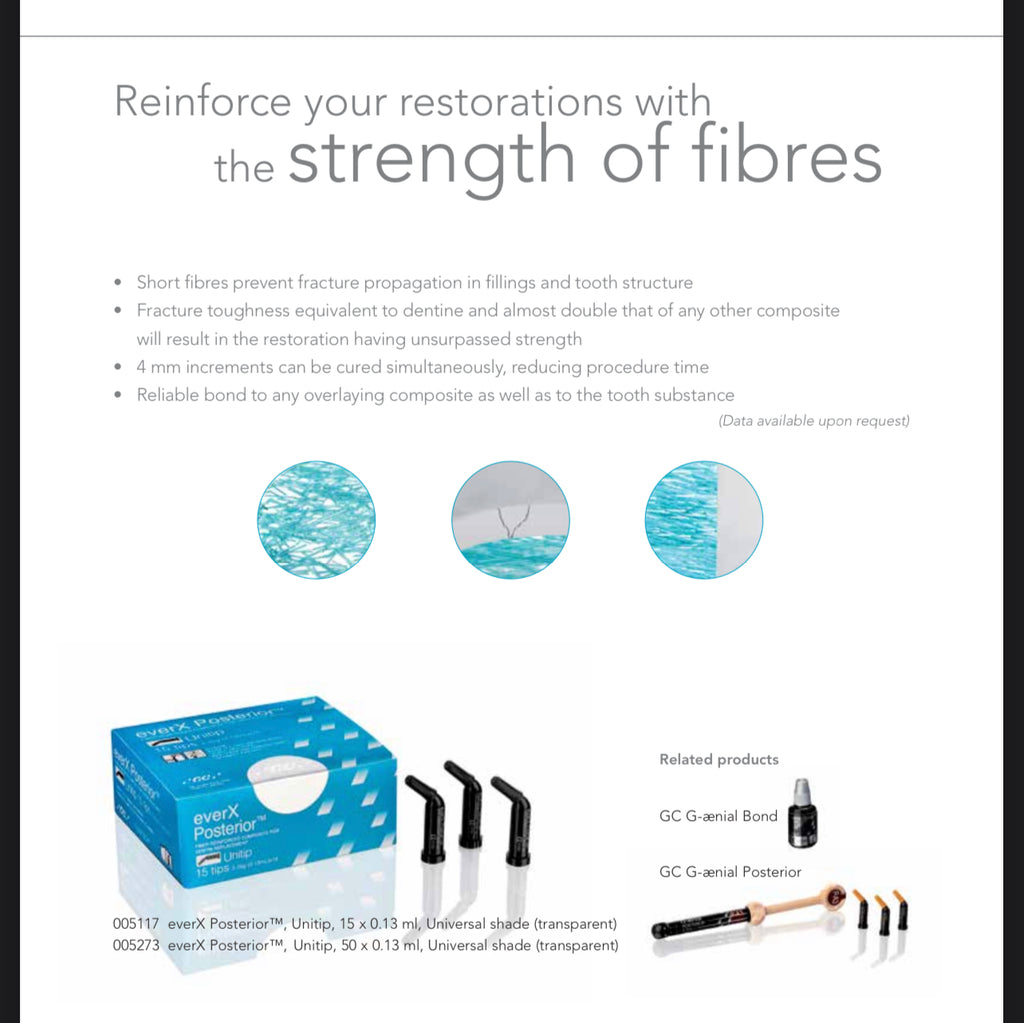
GC everX Posterior Unitip
Fibre-reinforced composite for dentine replacement
Unitips
15 × 0.25 g
Why buy everX Posterior from Toothsaver?
Toothsaver is an independent, clinician-led dental store founded by Dr Daniel Flynn. We are different from standard dental e-commerce stores because products are selected for clinical usefulness, not manufacturer pressure.
everX Posterior is listed because it solves a real restorative problem: how to reinforce large, deep, cracked or post-endodontic posterior restorations while still using a direct composite workflow.
The Toothsaver difference
- Clinician-led product selection
- Independent recommendations
- Products chosen for practical restorative and endodontic value
- Customer-first pricing
- Support from a dental team that understands post-endodontic restoration
Frequently asked questions
What is GC everX Posterior?
GC everX Posterior is a fibre-reinforced composite designed for dentine replacement and reinforcement in posterior restorations.
Is everX Posterior used as the final occlusal layer?
No. everX Posterior is used as a dentine replacement or reinforcing substructure and should be covered with a conventional composite enamel or occlusal layer.
What is everX Posterior useful for?
It is useful for large posterior cavities, Class I and Class II restorations, weakened teeth, cracked teeth, cusp replacement, post-endodontic restorations and cases after amalgam removal.
How does everX Posterior help with cracks?
The short fibres are designed to reinforce the restoration and help prevent or stop crack propagation through the filling.
Can everX Posterior be used after root canal treatment?
Yes. It is particularly useful as part of the restorative build-up in endodontically treated posterior teeth.
What is the difference between everX Posterior and everX Flow?
everX Posterior is a packable fibre-reinforced composite, while everX Flow is a flowable fibre-reinforced composite. Both are used as dentine replacement materials and should be covered with conventional composite.
What is included in the pack?
The pack contains 15 × 0.25 g Unitips.
Can it be used for core build-up?
Yes. everX Posterior can be used as a reinforcing dentine replacement material in core build-up workflows where appropriate.
Should I cover everX Posterior with another composite?
Yes. It should be covered with a conventional composite layer according to the manufacturer’s instructions.
Why buy from Toothsaver?
Toothsaver is clinician-led and selects products for practical clinical value. everX Posterior is included because it is a useful reinforcing material for large, weakened and post-endodontic restorations.
Summary
GC everX Posterior Unitip is a fibre-reinforced composite for dentine replacement in posterior restorations.
Supplied as 15 × 0.25 g Unitips, everX Posterior is designed to reinforce large cavities, cracked or weakened teeth and post-endodontic restorations before final capping with a conventional composite layer.


Ask Our Expert - Dr Daniel Flynn, Specialist Endodontist