


Payment & Security
Your payment information is processed securely. We do not store credit card details nor have access to your credit card information.
Description
Cerkamed Endo-Prep Gel & Cream
EDTA Gel and Cream for Chemo-Mechanical Root Canal Preparation
Cerkamed Endo-Prep Gel and Endo-Prep Cream are EDTA-based preparations for chemo-mechanical root canal preparation. They help soften the superficial dentine layer, support negotiation of difficult canals, assist removal of blockages and lubricate instruments during shaping.
Endo-Prep Gel
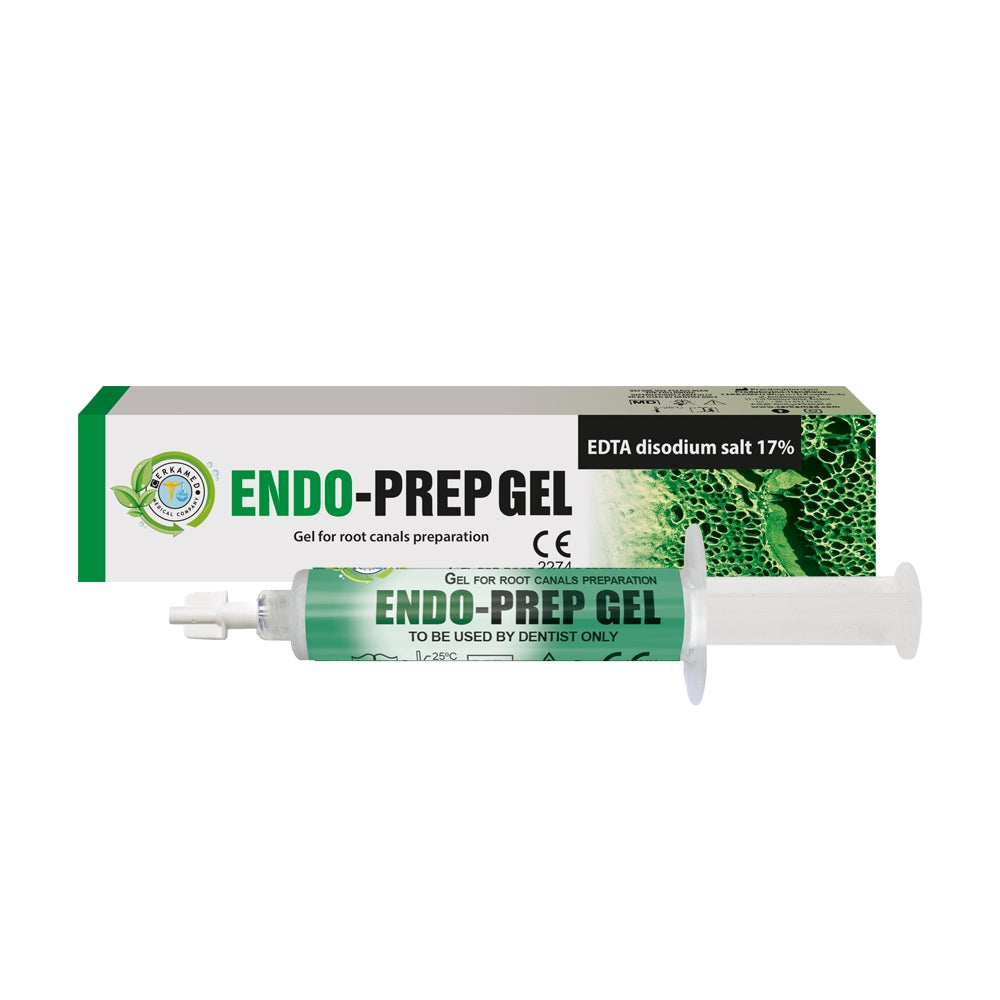
Endo-Prep Gel contains 17% EDTA disodium salt in a lubricating gel base. It is designed to support canal preparation by helping soften superficial dentine and lubricating the instrument during mechanical preparation.
- 17% EDTA disodium salt
- Gel base for lubrication
- Contains benzalkonium bromide
- Useful during canal negotiation and shaping
- Helps reduce instrument binding during preparation
Endo-Prep Cream
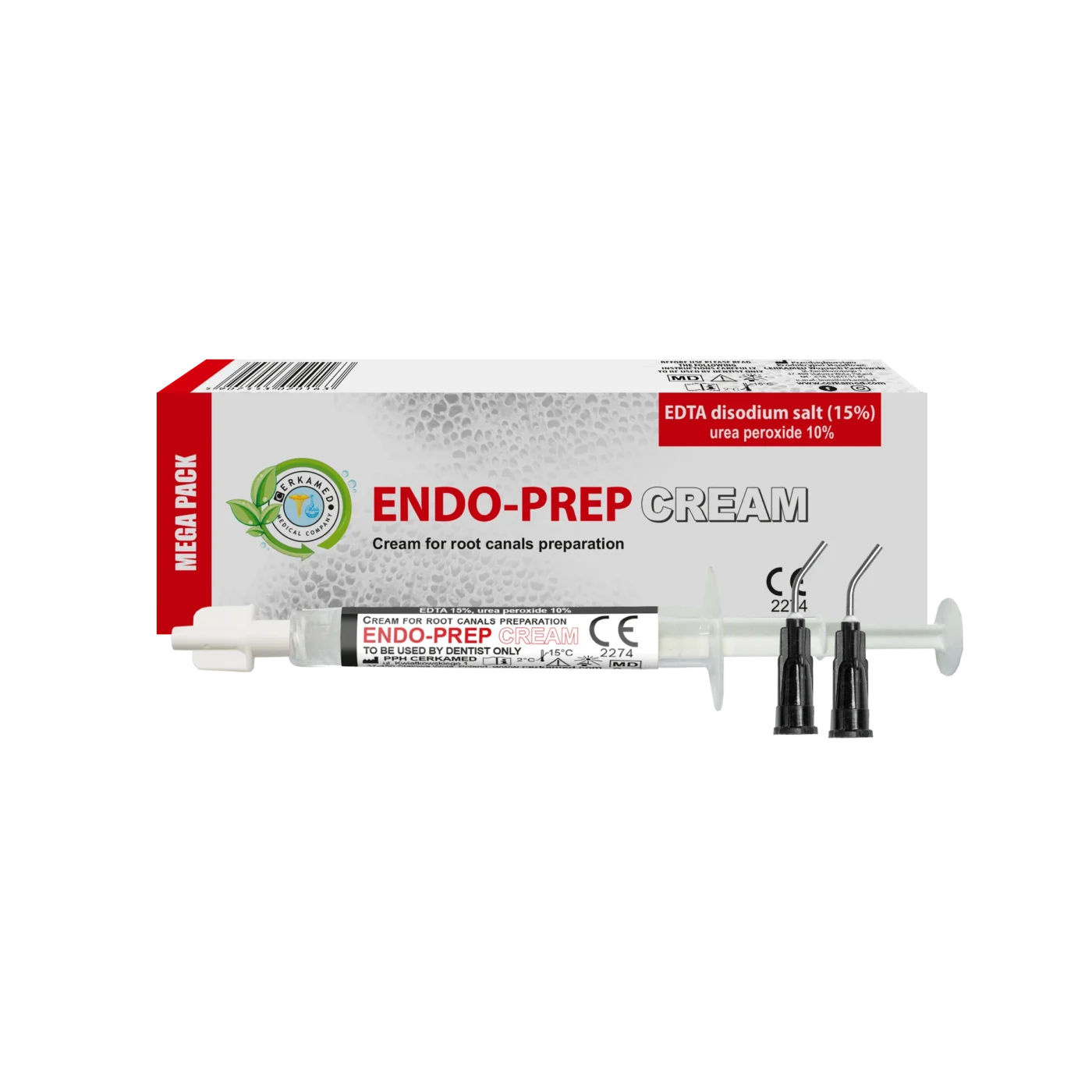
Endo-Prep Cream contains 15% EDTA disodium salt and 10% urea peroxide. When used with sodium hypochlorite during preparation, the cream creates foam that can help lift debris and dentine remnants from the prepared canal.
- 15% EDTA disodium salt
- 10% urea peroxide
- Foaming action when used with NaOCl
- Useful for chemo-mechanical preparation
- Helps lubricate instruments during canal shaping
Toothsaver clinical view
EDTA gels and creams are particularly useful where lubrication and chemo-mechanical preparation are needed during root canal shaping. They can help with canal negotiation, early glide path development and preparation of canals where dentine mud, debris or calcification make progress more difficult.
Use EDTA preparations deliberately and rinse thoroughly. EDTA can soften dentine if left in the canal or pulp chamber, and it should not be left between visits.
Gel or Cream — which should I choose?
Both products are intended for chemo-mechanical root canal preparation, but the formulation differs.
| Feature | Endo-Prep Gel | Endo-Prep Cream |
|---|---|---|
| Main EDTA concentration | 17% EDTA disodium salt | 15% EDTA disodium salt |
| Additional active component | Benzalkonium bromide | 10% urea peroxide |
| Clinical feel | Gel lubricant | Cream lubricant with foaming action when used with NaOCl |
| Typical use | Lubrication, canal negotiation and shaping support | Chemo-mechanical preparation with debris-lifting foam effect |
How EDTA supports canal preparation
EDTA works by binding calcium and magnesium ions, which helps soften the superficial dentine layer. In an endodontic preparation workflow, this can make it easier to negotiate canals, clear blockages and shape the canal with reduced instrument binding.
- Supports negotiation of narrow or difficult canals
- Helps soften superficial dentine during preparation
- Provides lubrication for hand or rotary instrumentation
- Can assist removal of dentine debris during shaping
- Useful in chemo-mechanical endodontic workflows
Typical clinical uses
- Root canal preparation
- Negotiation of difficult canals
- Early canal shaping
- Lubrication during instrumentation
- Support when managing blockages
- Chemo-mechanical preparation protocols
Important irrigation compatibility points
Do not use Endo-Prep immediately before or after chlorhexidine digluconate, as a white milky residue may form. Use purified water for rinsing between incompatible irrigants.
EDTA can also neutralise the effect of sodium hypochlorite, so irrigation sequencing and thorough flushing matter.
Suggested workflow context
Follow the manufacturer's instructions for use and your own clinical protocol. In general, EDTA gel or cream is used during mechanical preparation where lubrication and dentine-softening are desired.
- Isolate the tooth appropriately, normally with rubber dam.
- Access the canal system and establish the clinical objective.
- Apply the gel or cream using the supplied applicator or to the instrument according to instructions.
- Prepare the canal mechanically while maintaining appropriate irrigation.
- Rinse thoroughly and avoid leaving the product in the canal or chamber.
- Do not leave Endo-Prep in the canal between visits.
Important safety information
Endo-Prep Gel and Cream are for professional dental use only. Do not use in patients with hypersensitivity to the product components.
Do not leave the product in the canal or pulp chamber between visits, as this can lead to excessive softening of dentine.
Use caution when preparing close to the apical area. The product has cytotoxic potential and can cause severe skin burns and eye damage. Use rubber dam, disposable gloves, eye protection and protective clothing when handling the product.
EDTA may adversely affect the bonding strength of dentine to restorative materials. Consider the full restorative sequence and rinse thoroughly before bonding procedures.
Storage
- Endo-Prep Gel: keep in the original packaging below 25°C.
- Endo-Prep Cream: store in the original packaging between 2–15°C.
- Once opened, close the container securely after each use.
- Always follow the expiry date and manufacturer's instructions.
Why buy Endo-Prep from Toothsaver?
Toothsaver is a clinician-led UK dental supplier with a strong focus on endodontic products. We select products based on practical clinical usefulness in real endodontic workflows.
- Cerkamed EDTA gel and cream options
- Useful for canal negotiation and chemo-mechanical preparation
- Available alongside irrigants, endodontic files and activation devices
- Clinician-led product selection
- UK Toothsaver support
Frequently Asked Questions
What is Cerkamed Endo-Prep used for?
Cerkamed Endo-Prep Gel and Cream are used for chemo-mechanical root canal preparation. They help soften superficial dentine, support canal shaping and lubricate instruments during preparation.
What is the difference between Endo-Prep Gel and Endo-Prep Cream?
Endo-Prep Gel contains 17% EDTA disodium salt in a gel base with benzalkonium bromide. Endo-Prep Cream contains 15% EDTA disodium salt and 10% urea peroxide, giving a foaming effect when used with sodium hypochlorite.
Does Endo-Prep contain EDTA?
Yes. Endo-Prep Gel contains 17% EDTA disodium salt, while Endo-Prep Cream contains 15% EDTA disodium salt.
Can Endo-Prep help with blocked canals?
EDTA helps soften the superficial dentine layer and can support canal negotiation and clearing of blockages as part of a wider endodontic preparation protocol.
Can Endo-Prep be left in the canal between visits?
No. Do not leave Endo-Prep Gel or Cream in the canal or pulp chamber between visits, as this can lead to excessive softening of dentine.
Can Endo-Prep be used with chlorhexidine?
Do not use the product immediately before or after chlorhexidine digluconate, as a white milky residue can form. Use purified water for rinsing between incompatible irrigants.
Does EDTA affect sodium hypochlorite?
Yes. EDTA can neutralise the effect of sodium hypochlorite, so irrigation sequencing and thorough rinsing are important.
How should Endo-Prep Gel be stored?
Endo-Prep Gel should be kept in its original packaging below 25°C.
How should Endo-Prep Cream be stored?
Endo-Prep Cream should be stored in its original packaging between 2–15°C.
Related endodontic products
Explore related Toothsaver products for canal preparation, irrigation and shaping.
Endodontics Irrigation EDTA Endo-Solution Endodontic files Endo motors Cerkamed
Ask Our Expert - Dr Daniel Flynn, Specialist Endodontist