
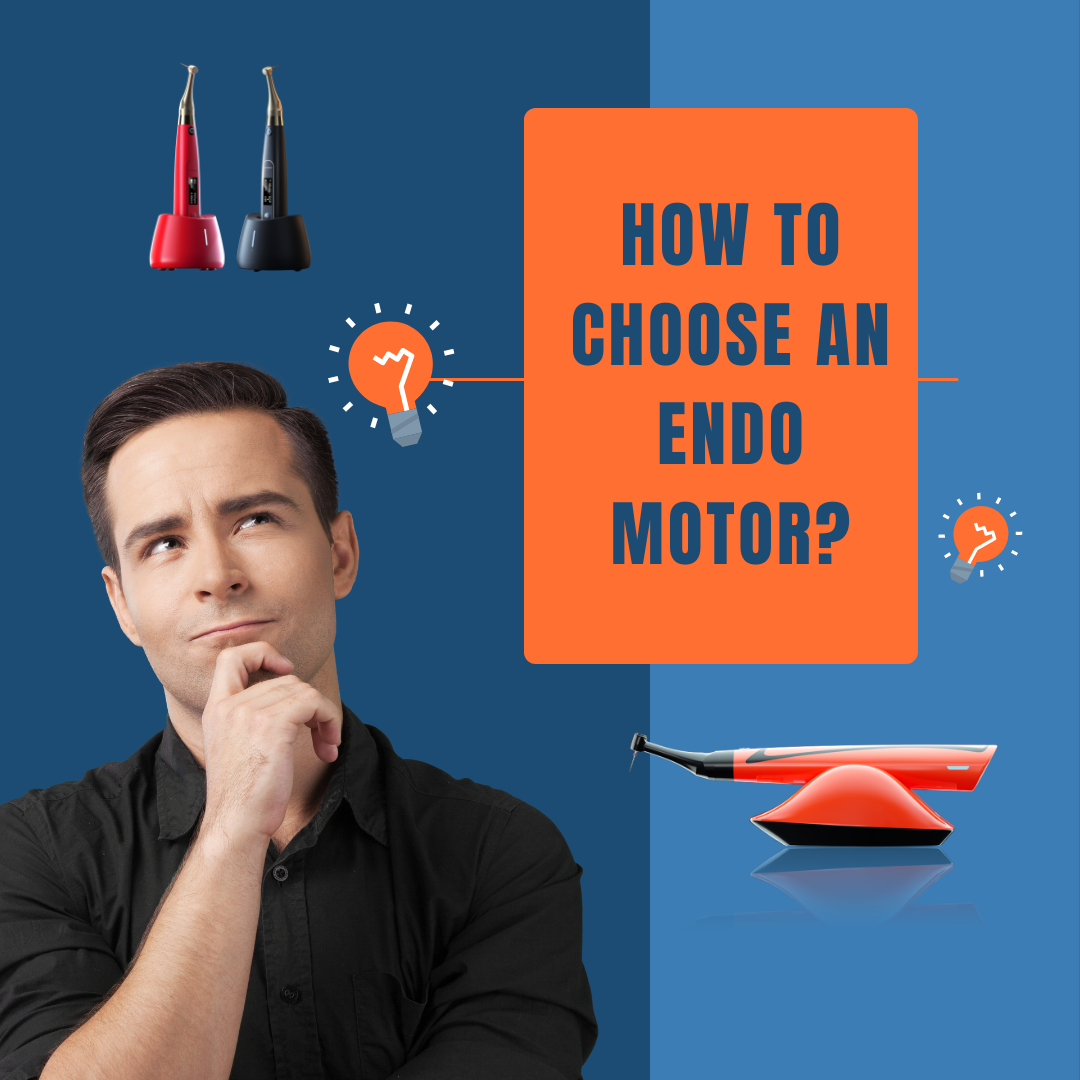
How to Choose the Best Endodontic Motor: An Endodontist’s Practical Guide
Choosing the best endodontic motor for your NiTi system requires careful consideration. While many manufacturers encourage clinicians to buy into closed endodontic motor ecosystems, it is important to understand the individual features that different motors offer—and how those choices may affect your clinical freedom in the future.
As an endodontic specialist, one of the most common mistakes I see is clinicians investing in a motor without realising that it may restrict which file systems they can use as their techniques and preferences evolve.
Why the Endodontic Motor Matters
Modern endodontics relies heavily on NiTi instrumentation, which demands precise control of torque, speed, and motion. A suitable endodontic motor helps to:
-
Reduce file separation
-
Optimise shaping predictability
-
Enhance efficiency and ergonomics
-
Support safer management of complex canal anatomy
However, even a technically advanced motor can become a limitation if it restricts system choice or clinical flexibility.
1. Torque and Speed Control: Non-Negotiable Fundamentals
Any modern endodontic motor must allow accurate adjustment of:
-
Torque, appropriate for contemporary NiTi files
-
Rotational speed, delivered consistently and predictably
Inadequate or unstable torque control increases cyclic fatigue and torsional stress—particularly in curved or narrow canals.
Clinical insight: Precision matters more than headline specifications. A motor with fewer but reliable torque options is often preferable to one with complex but poorly implemented controls.
2. Motion Options: Rotary, Reciprocating, or Both?
Endodontic motors may offer:
-
Continuous rotary motion
-
Reciprocating motion
-
Or both, depending on design
Some motors also include additional modes such as:
-
ATR (adaptive torque response)
-
T-mode for ledge bypassing
Dual-motion motors provide greater flexibility across a wide range of cases, particularly for retreatment and challenging canal anatomy.
3. File System Compatibility — Is Your Endodontic Motor Locked?
This is where many clinicians encounter problems after purchase.
Some motors are deliberately locked to specific file systems
Certain manufacturers design motors that:
-
Only recognise their own branded files
-
Restrict torque and speed settings to proprietary presets
-
Prevent the use of third-party NiTi systems
While this may simplify setup, it carries significant clinical and financial drawbacks.
Why locked motors are a problem
Locked motors can:
-
Limit clinical freedom
-
Increase long-term costs
-
Reduce adaptability as new systems emerge
Endodontic reality: No single file system is ideal for every canal. Your motor should adapt to your judgement—not the other way around.
What to look for instead
A good endodontic motor should:
-
Allow full manual customisation
-
Support multiple file systems
-
Adapt as techniques and evidence evolve
4. Preset Programmes: Helpful, but Not at the Expense of Choice
Preset programmes can:
-
Reduce setup time
-
Minimise user error
However, they must remain optional conveniences. The ability to override presets or create custom settings is essential for long-term flexibility.
5. Safety Features: Protecting Files and Teeth
Key safety features include:
-
Auto-reverse or auto-stop at torque limits
-
Smooth directional transitions
-
Clear visual or audible alerts
These features are particularly valuable in curved canals and retreatment cases.
6. Integrated Apex Locator: Convenience vs Accuracy
Many modern motors now include an integrated electronic apex locator, combining shaping and working length determination.
Advantages
-
Improved workflow efficiency
-
Real-time working length feedback
-
Reduced need to switch devices
Important considerations
Not all integrated apex locators perform equally. Accuracy may vary depending on:
-
Canal conditions
-
Presence of irrigants or blood
-
Motion during instrumentation
Clinical insight: Integrated apex locators are extremely convenient, but many clinicians still confirm working length with a standalone unit in complex cases. Reliability matters more than integration alone.
7. Ergonomics and Daily Usability
Endodontics is precision work, often under magnification.
Consider:
-
Contra-angle head size (critical in limited opening cases)
-
Handpiece weight and balance
-
Vibration and noise
-
Ease of use with loupes or microscopes
Good ergonomics reduce fatigue and improve tactile control.
8. Cordless vs Corded Motors
Most clinicians now prefer cordless motors due to:
-
Better ergonomics
-
Greater freedom of movement
-
Cleaner working fields
Battery reliability should be assessed realistically for busy practices.
9. Reliability, Servicing, and Long-Term Support
Before committing, consider:
-
UK servicing availability
-
Warranty and support
-
Platform longevity
Being locked into a proprietary ecosystem can complicate servicing and upgrades.
Final Thoughts: Choose Flexibility Over Restriction
The best endodontic motor is not the one with the most marketing claims—it is the one that:
-
Gives precise control over torque, speed, and motion
-
Allows use of trusted file systems
-
Evolves with your techniques
Endodontics is about informed chairside decisions. Your equipment should support—not constrain—that judgement.
Frequently Asked Questions
What is the most important feature in an endodontic motor?
Accurate torque control, stable speed delivery, and reliable motion control.
Are some endodontic motors locked?
Yes. Some are restricted to proprietary file systems, limiting flexibility and increasing costs.
Do I need an integrated apex locator?
It improves efficiency, but accuracy varies. Many clinicians still confirm with a standalone unit in complex cases.
Rotary or reciprocating—what’s better?
Neither universally. Motors offering both provide the greatest flexibility.
What motor does Dr Flynn use?
Dr Flynn currently uses the Black AI Motor and is also testing the new Endo Motor GT.
Why Choose the Woodpecker Black AI Motor?
The Woodpecker Black AI Motor combines flexibility, safety, and value.
Key reasons clinicians choose it:
-
Integrated apex locator with real-time feedback
-
AI-assisted adaptive motion
-
Open system with Broad compatibility with NiTi file systems
-
Cordless, ergonomic design, small contra-angled head
-
Strong feature set at a competitive price
For many UK clinicians, it offers an excellent balance between advanced functionality and clinical freedom.
👉 Contact Toothsaver for advice or group-buy options