
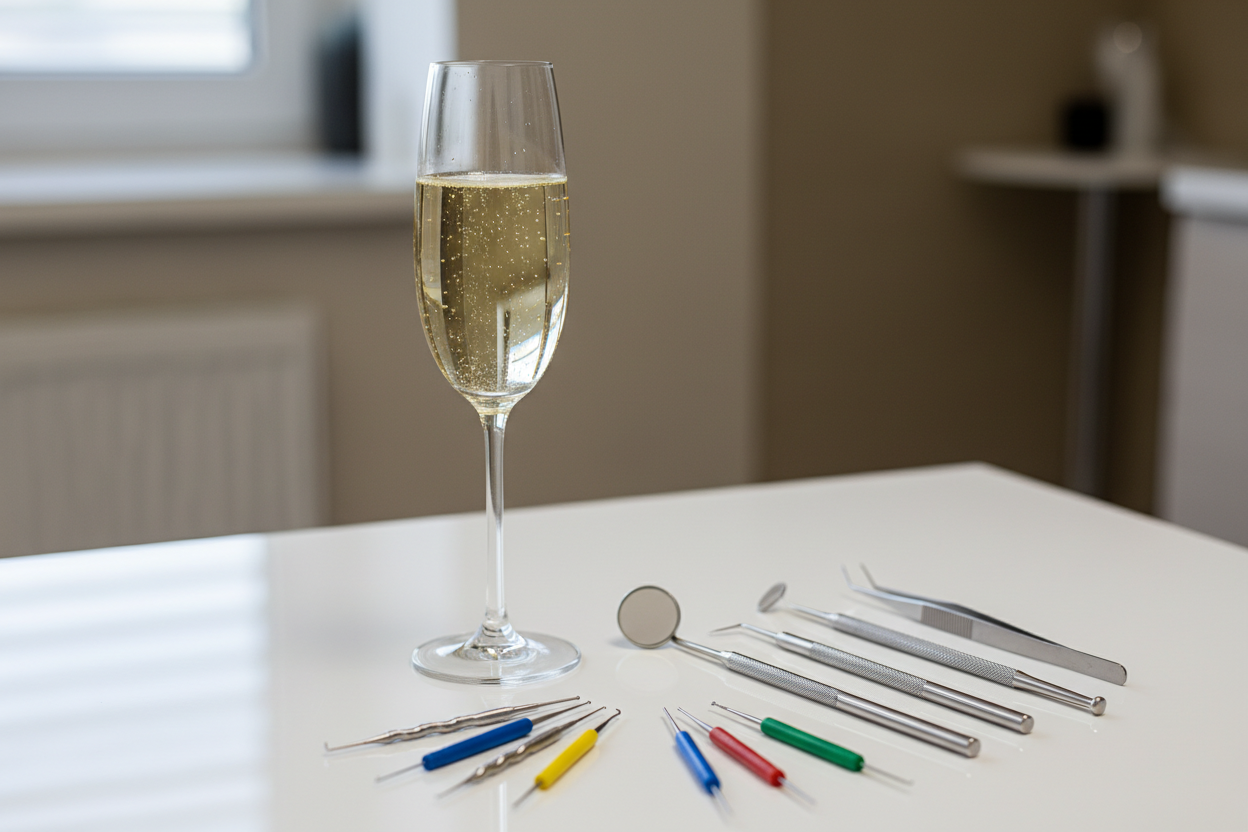
Finding the "bubbles" can be the turning point in a tough endo case for locating a canal entrance in vital cases. The Champagne Test (or Bubble Test) is a classic clinical technique used to locate hidden or calcified canal orifices, such as the elusive MB2.
How it Works:
When Sodium Hypochlorite (NaOCl) is placed into the pulp chamber, it reacts with remaining organic pulpal tissue. This chemical reaction releases oxygen, creating a stream of tiny bubbles—resembling a glass of champagne—that rise from the canal entrance.
The Protocol for Success:
Dry the Chamber: First, ensure the chamber is clean and dry to establish a baseline.
- Flood with NaOCl: Fill the access cavity with a medical-grade Sodium Hypochlorite solution.
- Observe under Magnification: Using a Dental Operating Microscope, look for a steady stream of bubbles emanating from a specific point on the floor or within a developmental groove.
- Investigate: Once the bubble source is identified, use a Komet Endo Tracer or a tip from the Castellucci Ultrasonic Kit to carefully remove the overlying dentine and "unroof" the canal.
Pro Tips for the Champagne Test:
Warm it up: Warmed NaOCl reacts more vigorously with organic tissue, making the bubbles easier to spot.
- Clear the Path: If the "champagne" points to a tight spot, use a miniKUT Blackjack MB2 File to immediately engage and negotiate the newly found space.
- Avoid False Positives: Ensure all pulp horn tissue is completely removed first, as any leftover debris in the chamber ceiling can create misleading bubbles.